


Wholesale Hair Extension Color Match Guide
08
Wholesale Hair Extension Color Matching Guide for Salons: How to Choose and Confirm the Right Color Code Before Ordering
Key takeaway: Before placing a wholesale hair extension order, the most important step for salons is not simply finding a shade that “looks close.” It is confirming whether that shade will blend naturally with the client’s own hair once installed.
In public communities such as Reddit, conversations about hair extension color mismatch are not uncommon. Many clients are not complaining that the extension color itself is unattractive. Instead, their frustration comes from the visible disconnect after installation: their natural hair appears to be one tone, while the extensions look like another, making the overall result feel unnatural.
In one typical example, a client mentioned that her natural hair had reddish/orange undertones with blonde highlights, but the extensions installed were more brown-blonde. As a result, her natural hair and the extensions did not blend smoothly and created a noticeable color break. Some commenters also pointed out that this type of issue often comes down to inaccurate color matching and blending judgment during the consultation.
At ESSMEI, we understand that when salons purchase hair extensions wholesale, their real concern is not just whether a similar color exists. The bigger question is: will this shade blend naturally once it is installed on the client? Even when the extensions and the client’s natural hair belong to the same general color family, differences in level, undertone, faded ends, highlight placement, or root shadow depth can still make the final result look harsh or disconnected.
In this guide, ESSMEI will walk through five practical steps salons can use to evaluate hair extension color codes before placing a wholesale order, confirm shade and order details, and record the final color formula after the service for easier refills and reorders.
Summary
Before placing an order, salons should not rely on product images alone. Instead, they should first evaluate the client’s natural hair color, desired result, level, undertone, and color structure before choosing between Solid, Mix, Piano, Rooted, or Balayage shades.
For first-time purchases, light blonde shades, multi-tonal colors, or gradient colors, salons should confirm the shade with a color ring, sample, real product photo, or natural-light video. Once the right color code is selected, salons should also check the extension type, length, grams, quantity, stock status, and ETA. After the service is completed, recording the final color formula can make future refills and repeat orders much easier.
Highlights
-
The right hair extensions color match depends on more than choosing a shade that looks close online. Salons need to check the client’s natural hair color, desired result, level, undertone, and color structure before ordering.
-
Solid, Mix, Piano, Rooted, and Balayage hair extensions serve different color-matching needs. The best option depends on whether the client’s hair is even, multi-tonal, highlighted, rooted, or softly blended from dark to light.
-
A hair extension color ring, sample, real product photo, or natural-light video can help salons reduce screen color differences and avoid color mismatch before placing a wholesale order.
-
After confirming the color code, salons should also check extension type, length, grams, quantity, stock status, and ETA to avoid installation or delivery problems.
Step 1: Diagnose the Client’s Existing Hair and Desired Result
Key takeaway: Before choosing a hair extension color code, salons should not rely only on a client’s inspiration photo or online product images. They need to evaluate both the client’s current hair color distribution and the desired final result. Differences between the roots, mid-lengths, and ends, as well as undertone and highlight placement, directly affect whether Solid, Mix, Piano, Rooted, or Balayage hair extension color shades will work best.
Many extension clients come into the salon with a reference photo of the look they want. However, in real salon consultations, the client’s existing hair color distribution matters just as much. Stylists need to check whether the roots, mid-lengths, and ends are consistent, and whether the client has previous highlights, bleaching, fading, or artificial color. All of these factors can have a major impact on the final blend.
In general, if the client does not have visible highlights, bleaching, or multi-tonal variation, and the overall hair color is fairly even from root to end, salons can start by considering Solid shades. Solid shades work well for clients with natural black, brown, or single-tone hair and can create a clean, uniform, natural-looking blend. However, if the client’s ends are faded, sun-lightened, or visibly different from the mid-lengths, a single Solid shade may look too flat or may not blend well enough.
If the client’s hair is multi-tonal, such as hair with highlights, lowlights, previous bleaching, fading, or different depths through the mid-lengths and ends, salons can consider Mix or Piano color hair extensions. Mix shades are useful when the client’s hair falls naturally between two color codes. Piano shades are better when the hair has a more visible highlight or lowlight contrast.
If the client’s hair gradually changes from root to end, such as a dark root with lighter ends, shadow root, ombré, or balayage effect, salons can consider Rooted or Balayage hair extensions. Rooted shades are useful for clients with a deeper root area or a lower-maintenance blonde result. Balayage shades are better for soft gradient effects, bronde looks, or grown-out blonde results.
In addition to evaluating the client’s existing hair color, salons also need to confirm the client’s true desired result. Many clients bring inspiration photos, but those images may be affected by lighting, filters, editing, and the model’s original hair color. They cannot always be copied directly onto the client’s own hair.
During the consultation, salons should clarify whether the client wants a clean Solid look, a natural multi-tonal blend, visible highlight dimension, a soft Balayage gradient, a low-maintenance rooted blonde, or a bright, clean Platinum Blonde result. Different goals require different color structures.
In simple terms, Step 1 is not just about asking, “What color is the client’s hair now?” It is also about understanding, “What final result does the client want?” When both the existing hair and the desired result are considered together, salons can narrow down the right Solid, Mix, Piano, Rooted, or Balayage hair extension options more accurately.
Step 2: Narrow Down the Right Color Code by Level, Undertone, and Color Structure
Note: In the ESSMEI Hair color system, hair extension shades can be organized by color structure, including Solid, Mix, Piano, Rooted, and Balayage. This helps salons choose a better-matched shade based on the client’s actual hair color distribution.
Key takeaway: Level, undertone, and color structure are the three key factors salons should use to narrow down the right hair extension color code. Level determines how light or dark the shade is. The undertone determines whether the shade is cool, warm, golden, ash, beige, or neutral. Color structure determines whether the salon should choose Solid, Mix, Piano, Rooted, or Balayage.
When choosing a hair extension shade for a client, salons can start with three main questions: the depth level, the undertone, and the color structure.
-
Level refers to how light or dark the color is, such as dark brown, brown, blonde, or light blonde.
-
Undertone refers to the underlying color direction, such as ash, beige, golden, warm, or neutral.
-
Color structure refers to how the shade is built, such as Solid, Mix, Piano, Rooted, or Balayage.
Hair extensions color levels 1-10 chart
| Level | Common Description |
| 1 | Jet Black |
| 2 | Off Black |
| 3 | Dark brown |
| 4 | Medium / dark brown |
| 5 | Medium brown |
| 6 | Light brown |
| 7 | Dark blonde / brown blonde |
| 8 | Medium blonde / light blonde brown |
| 9 | Light blonde |
| 10 | Very light blonde / platinum |
| 10+ / 11 | White platinum |
Solid hair extensions shade chart : Best for Clients with More Even Hair Color
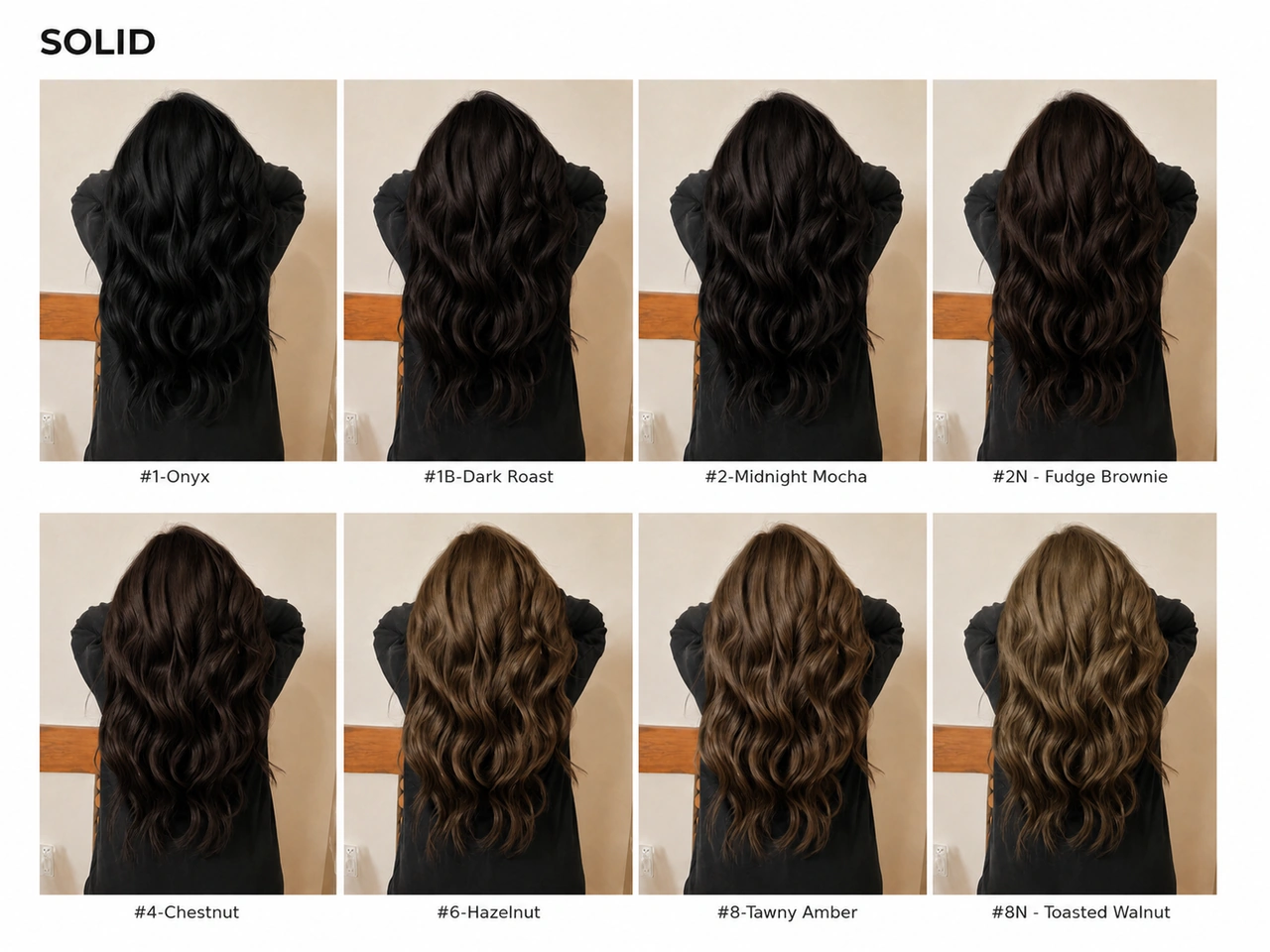
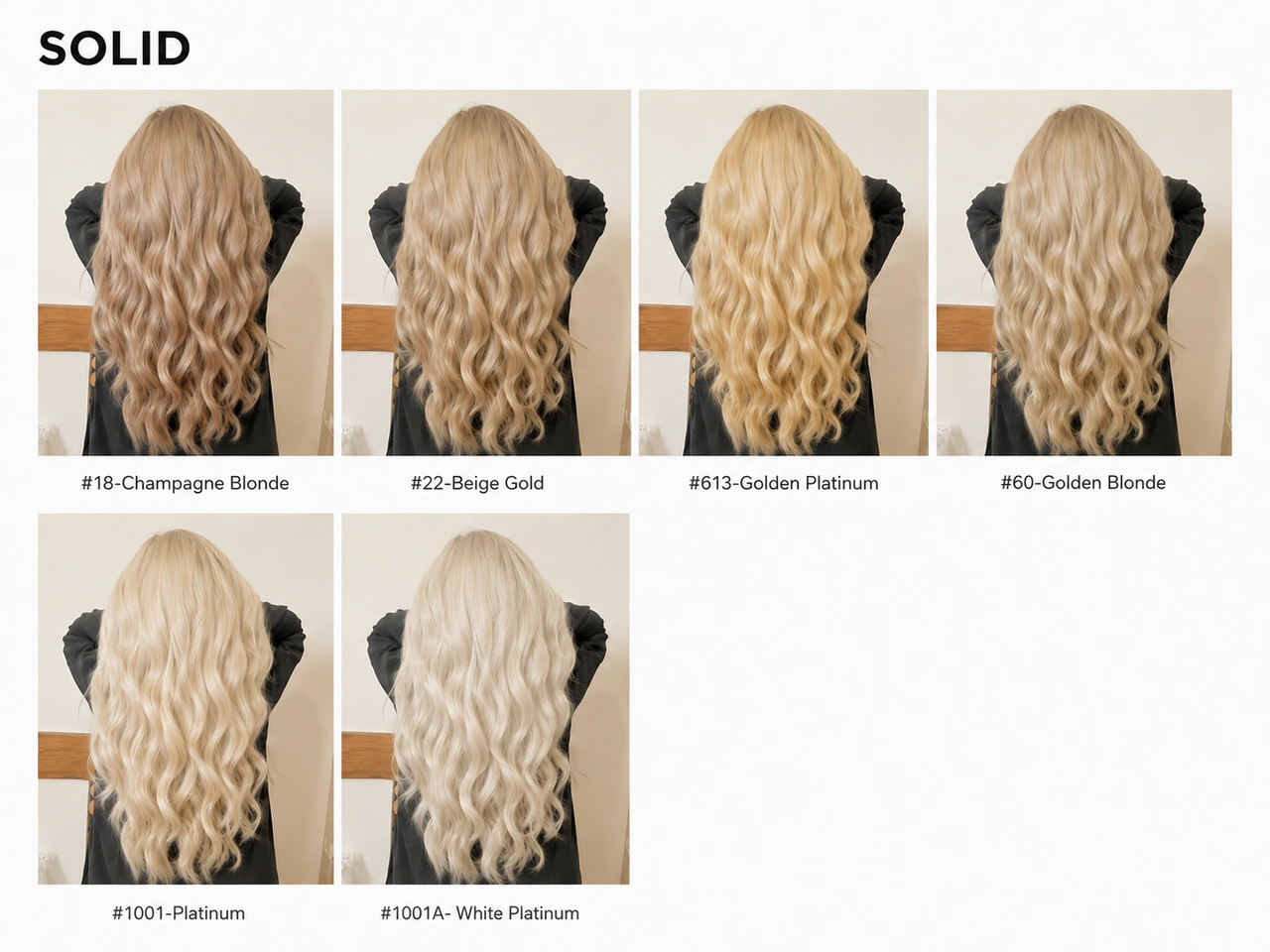
| Color Code | Color Name | Approx. Level | Undertone Profile | Suitable Client Hair Color |
| #1 | Onyx | Level 1 | Cool / Neutral Black | Natural black or deep black hair |
| #1B | Dark Roast | Level 2 | Neutral / Soft Black | Off-black or natural black-brown hair |
| #2 | Midnight Mocha | Level 3 | Neutral / Cool Dark Brown | Dark brown or cool-toned dark brown hair |
| #2N | Fudge Brownie | Level 3 | Neutral Dark Brown | Dark brown hair that should not look too cool or too red |
| #4 | Chestnut | Level 4 | Warm / Chestnut Brown | Chestnut brown, warm brown, or slightly red-brown hair |
| #6 | Hazelnut | Level 5-6 | Warm / Hazelnut Brown | Hazelnut brown or warm brunette hair |
| #8 | Tawny Amber | Level 6-7 | Neutral / Ash Light Brown | Ash brown, light brown, or soft bronde hair |
| #8N | Toasted Walnut | Level 6-7 | Neutral Soft Brown | Natural brown, neutral light brown, or soft bronde hair |
| #18 | Champagne Blonde | Level 7-8 | Neutral Beige / Dirty Blonde | Dirty blonde, beige blonde, champagne blonde, or soft blonde hair |
| #22 | Beige Gold | Level 9 | Warm Neutral / Beige Gold |
Beige blonde, warm blonde, or soft light blonde hair |
| #613 | Golden Platinum | Level 10 | Warm / Creamy Golden Blonde | Golden light blonde, creamy blonde, or warm platinum-blonde hair |
| #60 | Golden Blonde | Level 10 | Cool / Ash Blonde | Ash blonde, cool light blonde, or platinum blonde hair |
| #1001 | Platinum | Level 10 | Cool / Clean Platinum | Platinum blonde or cool light blonde hair |
| #1001A | White Platinum | Level 10–11 | Cool / Ash White Platinum | Very light platinum, icy blonde, or white-platinum hair |
Mix hair extensions shade chart: Best for Clients Between Two Color Codes or with Natural Multi-Tonal Hair
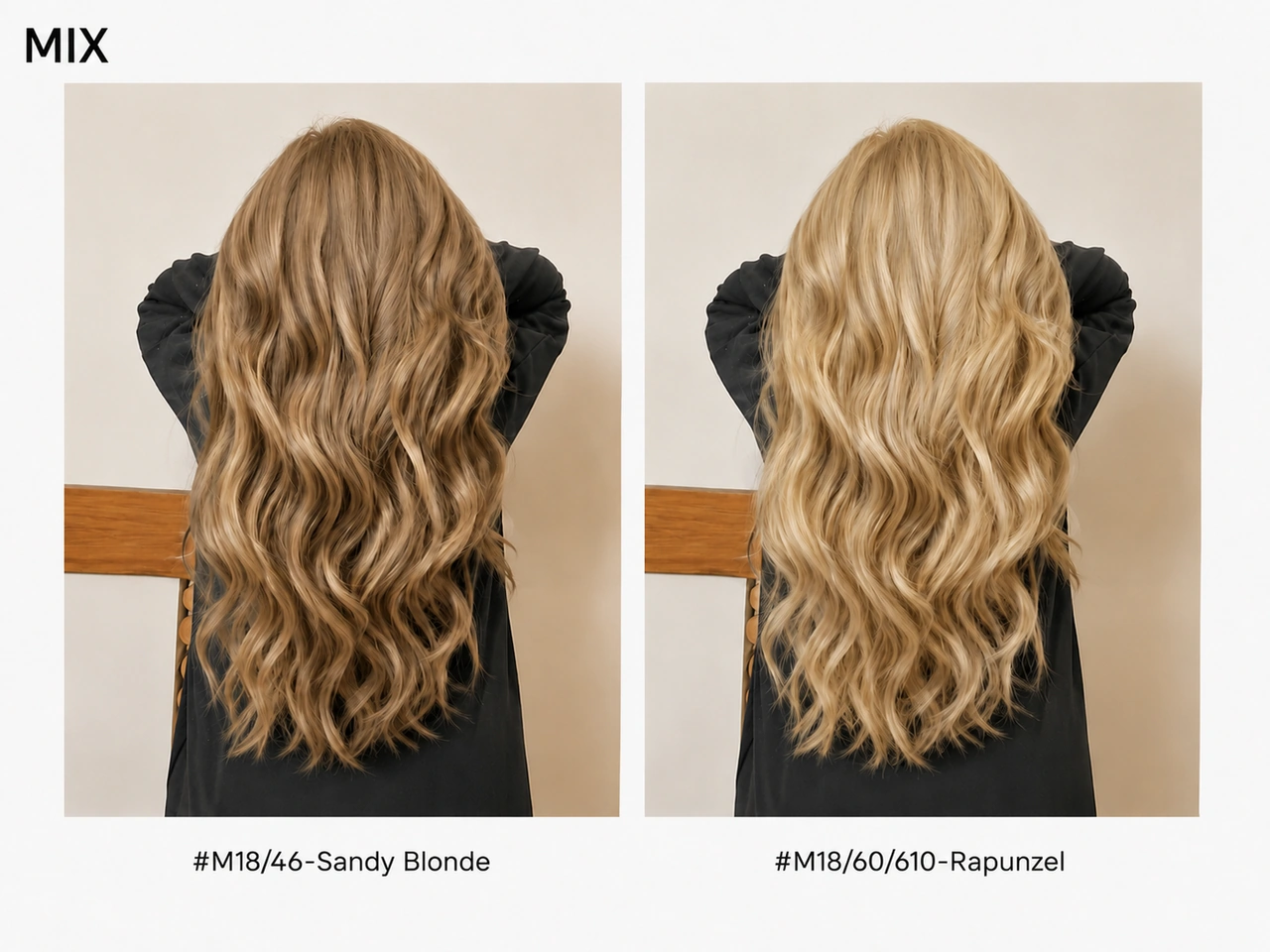
| Color Code | Color Name | Approx. Level | Undertone Profile | Suitable Client Hair Color |
| #M18/46 | Sandy Blonde | Level 7–8 | Caramel Blonde / Neutral-Warm Bronde | Caramel blonde, dirty blonde, beige blonde, or light brown-blonde mixed hair |
| #M18/60/610 | Rapunzel | Level 8–10 | Cool Blonde + Subtle Golden + Ash Blonde Dimension | Light blonde, bright blonde, highlighted blonde, or multi-dimensional blonde hair |
Core use of Mix shades: When the client’s hair is not completely one solid color but does not have strong stripe-like highlights, Mix shades can create a softer and more natural blend than a single Solid shade.
Piano hair extensions shade chart: Best for Clients with Visible Highlights or Lowlights
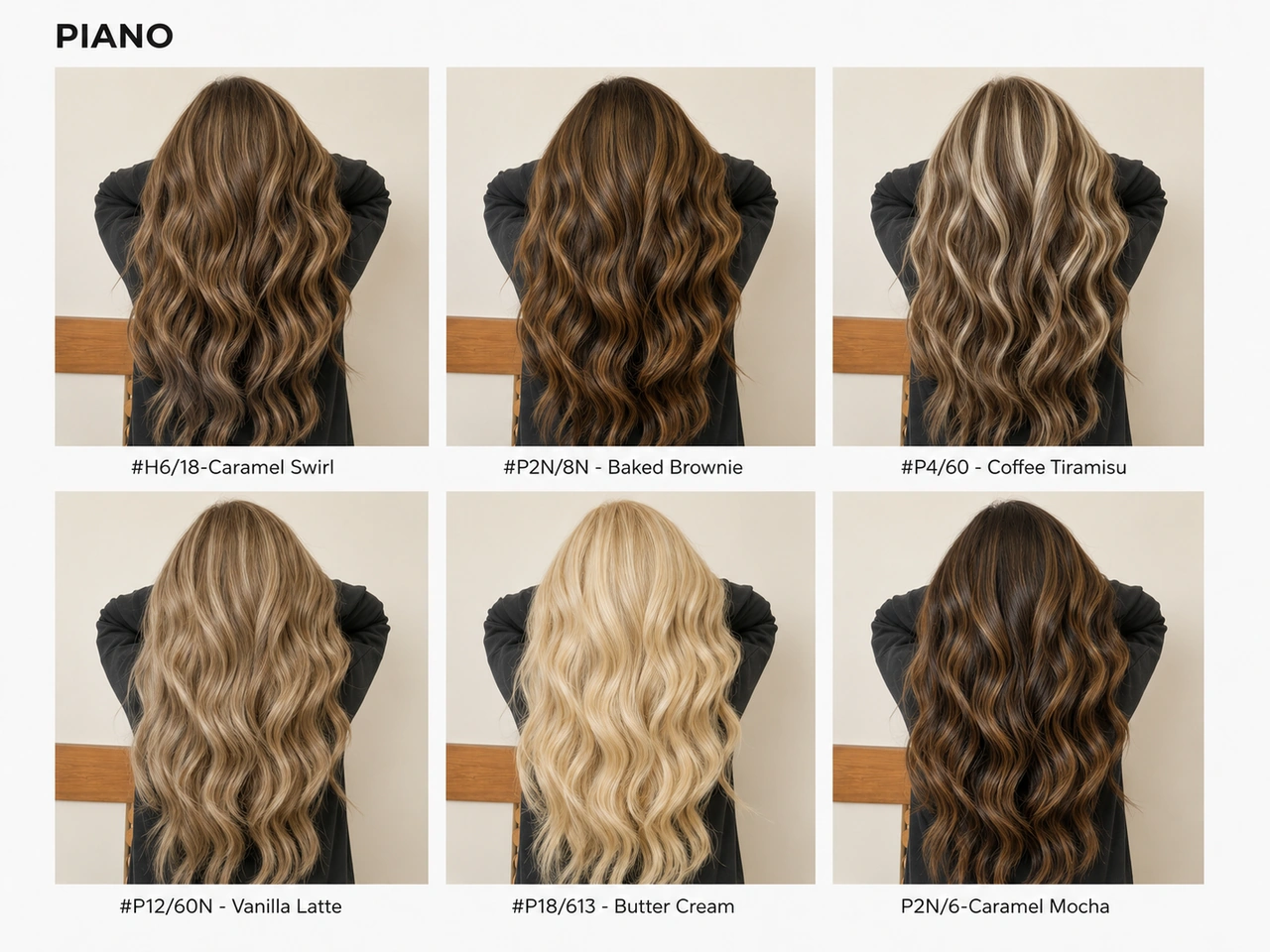
| Color Code | Color Name | Approx. Level | Undertone Profile | Suitable Client Hair Color |
| #H6/18 | Caramel Swirl | Level 6–8 | Warm Caramel + Champagne | Caramel highlights, warm brown-blonde highlights, or bronde hair |
| #P2N/8N | Baked Brownie | Level 3–7 | Neutral Dark Brown + Neutral Light Brown | Dark brown base with light brown or soft bronde highlights |
| #P4/60 | Coffee Tiramisu | Level 4–10 | Chocolate Brown + Cool Platinum Blonde | Brown base with platinum highlights, balayage, or stronger contrast |
| #P12/60N | Vanilla Latte | Level 8–10 | Beige Blonde + Neutral Platinum Blonde | Beige blonde, soft neutral blonde, vanilla-latte blonde, or grown-out highlights |
| #P18/613 | Butter Cream | Level 7/8–10 | Butter / Creamy Warm Blonde | Dirty blonde, butter blonde, cream blonde, or low-contrast blonde dimension |
| #P2N/6 | Caramel Mocha | Level 3–6 | Neutral Dark Brown + Warm Chestnut Brown | Natural medium-deep brown, chocolate brown, caramel brown, or chestnut brown hair |
Core use of Piano shades: When the client’s hair has visible dimension, such as blonde highlights, brown lowlights, or highlighted streaks, Piano shades can better mimic real color variation than a single Solid shade.
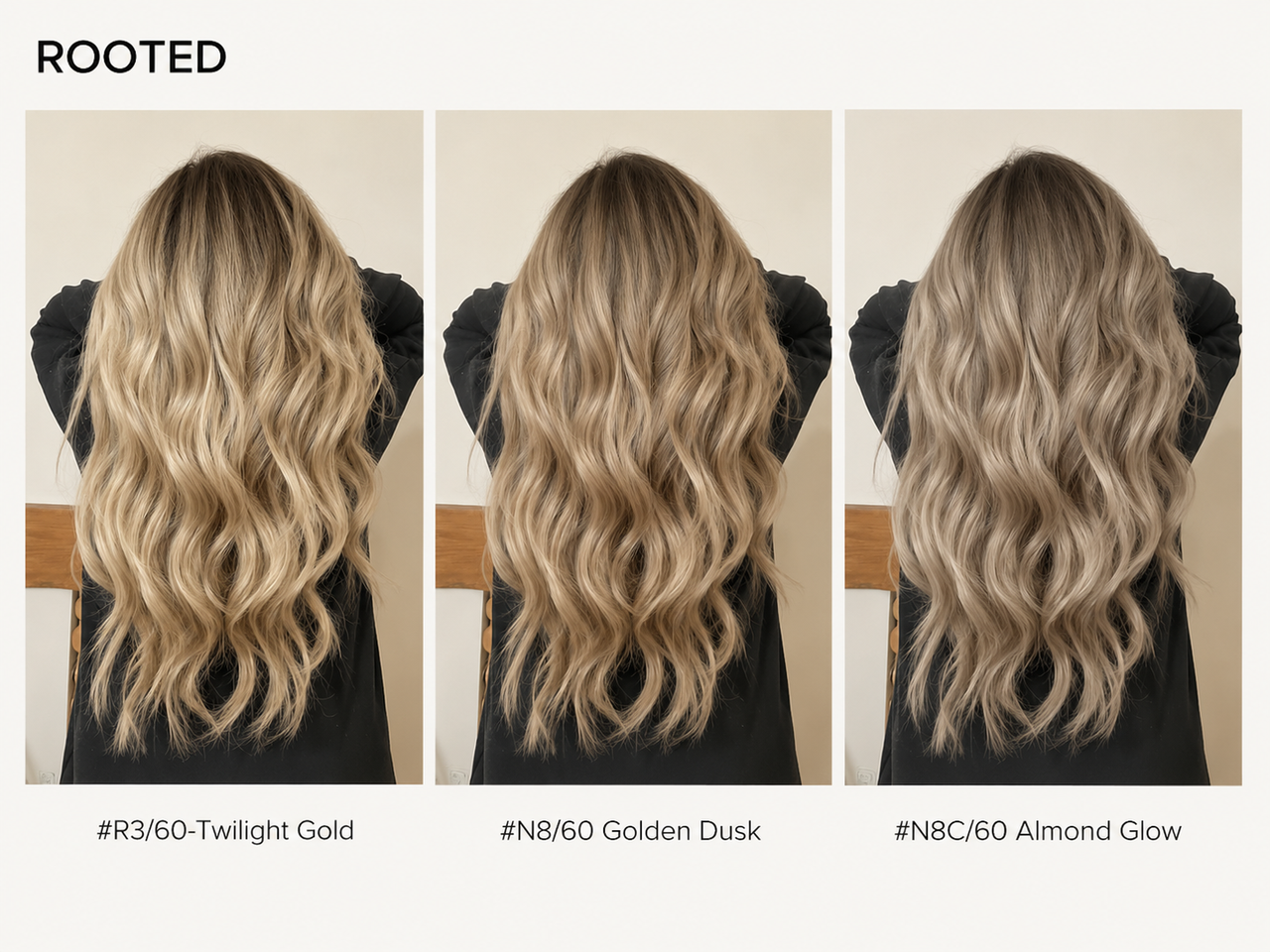
Rooted hair extensions shade chart : Best for Clients with Root/Base Contrast or a Low-Maintenance Blonde Goal
| Color Code | Color Name | Approx. Level | Undertone Profile | Suitable Client Hair Color |
| #R3/60 | Twilight Gold | Root Level 3 → Ends Level 10 | Dark Brown Root + Cool Platinum Blonde | Deep brown roots with platinum blonde ends; high-contrast rooted blonde look |
| #N8/60 | Golden Dusk | Root/Base Level 6/7 → Ends Level 10 | Neutral Bronde + Cool Platinum Blonde | Light brown-blonde, natural bronde, or soft rooted platinum-blonde hair |
| #N8C/60 | Almond Glow | Root/Base Level 6/7 → Ends Level 10 | Cool Ash Bronde + Cool Platinum Blonde | Cool beige-brown, ash bronde, or cool-toned blonde hair |
Core use of Rooted shades: Rooted shades are a strong choice when the client has a deeper root, shadow root, root smudge, or wants a lower-maintenance blonde result.
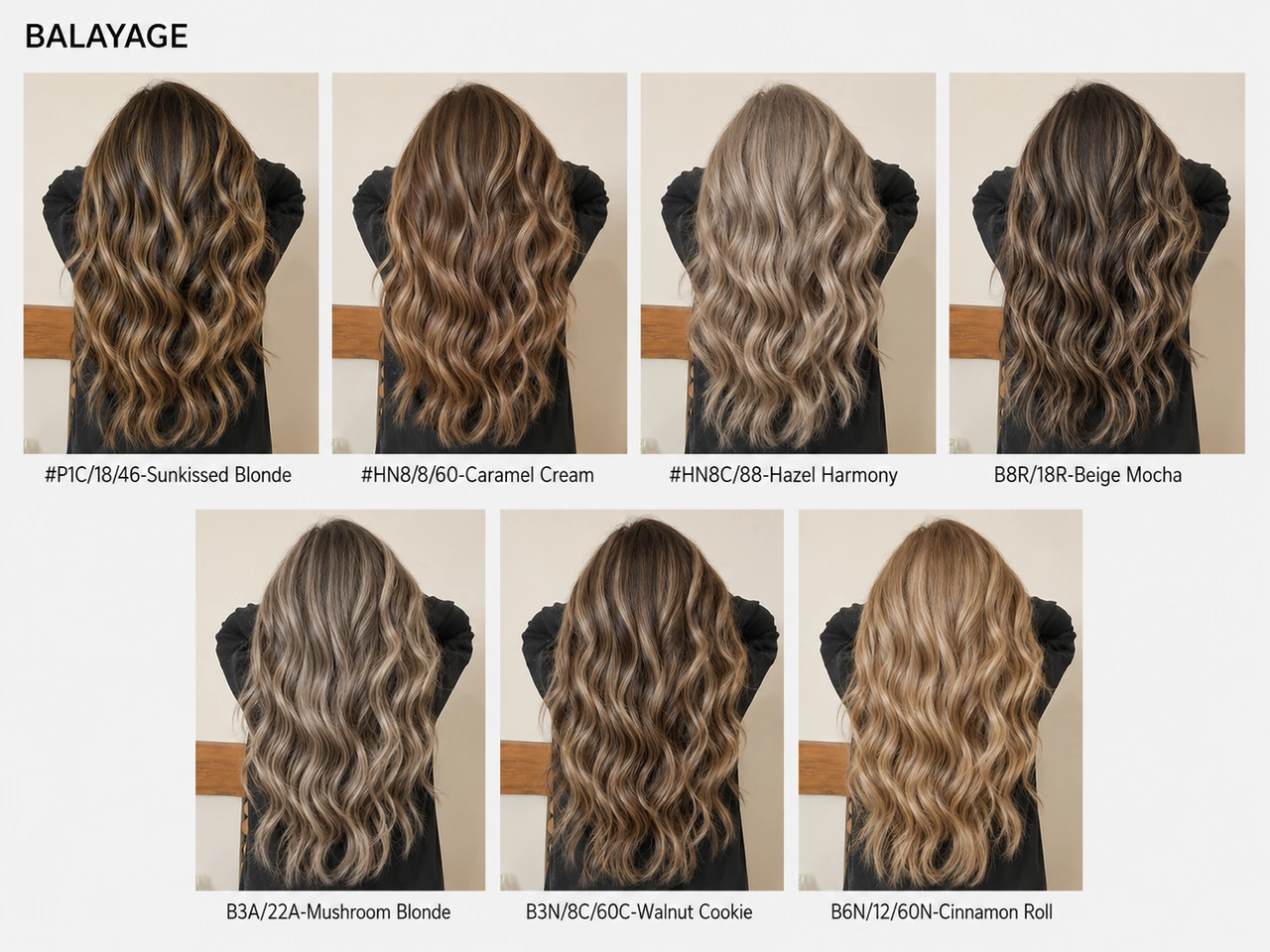
Balayage hair extensions shade chart: Best for Soft Gradient, Bronde, or Grown-Out Blonde Looks
| Color Code | Color Name | Approx. Level | Undertone Profile | Suitable Client Hair Color |
| #P1C/18/46 | Sunkissed Blonde | Root Level 1 → Mid/Ends Level 8/9 | Cool Mocha / Dark Root + Caramel Blonde Dimension | Black or very dark brunette roots with caramel blonde, dirty blonde, or bronde highlights |
| #HN8/8/60 | Caramel Cream | Root/Base Level 6/7 → Ends Level 10 | Neutral Bronde + Light Brown + Cool Platinum Highlights | Light brown, dark blonde, natural bronde, or highlighted blonde hair |
| #HN8C/88 | Hazel Harmony | Root/Base Level 6/7 → Mid/Ends Level 10+/11 | Cool Ash Bronde + Icy / Pure Platinum | Ash brown, cool bronde, icy blonde, or white-platinum highlighted hair |
| #B3N/8C/60C | Walnut Cookie | Root/Base Level 3 → Mid/Ends Level 10 | Neutral Dark Brown Root + Cool Ash Bronde + Cool Platinum | Dark brunette with ash brown, cool blonde, or platinum balayage |
| #B6N/12/60N | Cinnamon Roll | Root/Base Level 6 → Mid/Ends Level 10 | Neutral Light Brown Root + Beige / Neutral Blonde | Light brown, dark blonde, beige blonde, or neutral blonde balayage |
| #B3A/22A | Mushroom Blonde | Root/Base Level 3 → Mid/Ends Level 9 | Ash Brown Root + Ash Light Blonde | Ash brown, cool brown, smoky blonde, or ash-blonde balayage |
| #B8R/18R | Beige Mocha | Base Level 6/7 → Highlights Level 8 | Rooted Bronde / Beige Dirty Blonde | Light brown, dark blonde, dirty blonde, beige brown, or soft rooted bronde hair |
Core use of Balayage shades: When the client’s hair transitions softly from darker to lighter tones, or when the desired result is bronde, grown-out blonde, or sun-kissed hair extension dimension, Balayage shades can create a more natural gradient blend.
In addition to these shade structures, stylists can also improve blending by combining multiple color codes. For example, different extension shades can be placed according to the client’s surface layers, mid-lengths, ends, or highlight distribution to create a more seamless overall result.
Step 3: Confirm the Shade with a Color Ring, Sample, Real Photos, or Video
Key takeaway: Before placing a wholesale order, salons should not rely only on screen images to judge hair extension colors. A color ring, sample, real product photo, or natural-light video can help confirm the true shade and reduce the risk of color mismatch, wrong shade selection, and poor blending after installation.
The truth is, judging hair extension colors from screen images alone is not fully reliable. Different monitors, phone screens, lighting conditions, photography settings, and image compression can all make the same color code look different. That is why ESSMEI recommends that salons purchase or use a hair extension color ring before placing a wholesale order.
A hair extension color ring is usually made with real hair samples, which allows salons to evaluate the actual depth, undertone, and color structure more accurately than online images alone. For Solid, Mix, Piano, Rooted, or Balayage shades, a color ring can also help salons see the difference between single-tone colors, blended colors, highlight effects, and root-to-end gradients more clearly.
By confirming the shade before purchasing in bulk, salons can reduce guesswork, screen color differences, image misinterpretation, and uncertainty around color structure. This also helps lower the risk of ordering the wrong shade, creating unnecessary inventory pressure, or installing extensions that do not blend well with the client’s natural hair.
For new hair extension shades, light blonde colors, Balayage gradient shades, or Rooted colors, salons can also request samples, real product photos, or natural-light videos before placing a bulk order.
Step 4: Check Extension Type, Stock, Length, Grams, Quantity, and ETA Before Ordering
Key takeaway: After choosing the right hair extension color code, salons still need to confirm the extension type, stock status, length, grams, quantity, and ETA before ordering. These details directly affect the client’s appointment schedule, installation result, and overall service experience.
Choosing the right hair extension color code is only the first step before placing an order. Salons also need to confirm the specific extension type based on the client’s planned installation method, such as Tape-In, Weft, Genius Weft, I-Tip, or Flat Tip. Different extension types have different packaging units, installation methods, and usage requirements, so salons should not confirm color alone. They also need to check the required length, grams, and quantity.
Before placing a wholesale order, salons should evaluate the client’s natural hair density, target length, desired fullness, and chosen extension method to determine how many packs, how many grams, and what length are needed. For example, a fine-haired client and a thick-haired client may need different amounts of hair to achieve the same length and volume result. Tape-In, Weft, and I-Tip extensions may also require different quantities depending on the installation plan.
If the salon orders too little hair, the final result may look thin, uneven, or poorly blended. If the salon orders too much, it may create unnecessary inventory pressure.
After confirming the product specifications, salons should also check stock status and ETA. For clients who already have an installation appointment scheduled, it is important to confirm with the hair extension supplier whether the target shade, extension type, and length are in stock, as well as the estimated shipping and delivery timeline.
If a specific color code, length, or extension type is temporarily out of stock, salons can contact the supplier for a close shade recommendation, a suitable alternative color structure, or another product option that still supports the client’s blending goal. This helps avoid appointment delays caused by stock uncertainty.
Step 5: Record the Final Extension Color Match for Easier Reorders
Key takeaway: After the extension service is completed, salons should record the client’s final color code, color structure, length, grams, result photos, and blending notes. This makes future refills, maintenance appointments, and reorders much easier.
After each extension service, salons can record the client’s hair extension color code, color structure, length, grams, installation result photos, and blending notes in a client profile, CRM system, or salon management software.
For example, the stylist can note whether the final result used Solid, Mix, Piano, Rooted, or Balayage hair extension shades, whether multiple color codes were blended together, whether the ends needed extra trimming or toning, and how naturally the extensions blended after installation.
The next time the client needs a refill, maintenance appointment, replacement hair, or reorder, the salon does not need to restart the hair extension color matching process from the beginning. Instead, the stylist can refer back to the previous formula and confirm the right product specifications more quickly.
This reduces consultation time, improves reorder efficiency, supports more consistent service results, and helps create a better client experience.
Q&A
How do salons choose the right hair extension color?
Salons should compare the client’s natural hair color, desired result, hair color level, undertone, and color structure. This helps determine whether Solid, Mix, Piano, Rooted, or Balayage hair extensions will blend best.
Why do hair extensions sometimes not match natural hair?
Hair extensions may not match when the level, undertone, faded ends, highlights, or root shadow do not align with the client’s real hair. Even similar-looking shades can appear disconnected after installation.
What is the difference between level and undertone?
Level means how light or dark the hair color is, such as dark brown, blonde, or platinum blonde. Undertone means the color direction, such as ash, beige, golden, warm, cool, or neutral.
Should salons use a hair extension color ring before ordering?
Yes. A hair extension color ring helps salons compare real hair samples instead of relying only on screen images. It is especially useful for blonde, rooted, balayage, piano, and mixed color hair extensions.
When should salons choose Balayage or Rooted hair extensions?
Rooted hair extensions are suitable for clients with root/base contrast, shadow root, or a low-maintenance blonde goal. Balayage hair extensions are better for soft gradients, bronde looks, sun-kissed dimension, or grown-out blonde effects.
What should salons confirm before placing a wholesale hair extensions order?
Salons should confirm the color code, extension type, length, grams, quantity, stock status, and ETA before ordering. These details help avoid color mismatch, insufficient hair volume, inventory pressure, or appointment delays.
CTA
Before placing a wholesale hair extension order, salons should confirm the actual hair color with a ESSMEI color ring or sample. Compared with online images alone, a physical color ring allows salons to evaluate shade depth, undertone, and color structure more accurately, helping reduce color guesswork, mismatch risk, and unnecessary inventory pressure.
Not sure which shade is right for your client? You can purchase a color ring, request samples, or send your client’s photos to us. The ESSMEI team can help recommend a suitable color code, color structure, and wholesale purchasing plan before you place your order.
Related Posts
 Butterfly Weft Hair Extensions: 4 Types Compared
18
Butterfly Weft Hair Extensions: 4 Types Compared
Compare four ESSMEI butterfly weft hair extensions—Flip, Invisi Flip, Genius Flip, and Twin-Genius—and choose the right option for each salon client.
Read More Best Hair Extensions for Fine Hair: Tape-Ins, I-Tips & Genius Wefts
22
Best Hair Extensions for Fine Hair: Tape-Ins, I-Tips & Genius Wefts
Discover the best hair extensions for fine hair clients. Compare Tape-In, I-Tip, and Genius Weft extensions to help salons create lightweight, natural, and comfortable results.
Read MoreComments (0)
No comments yet.