


Best Hair Extensions for Fine Hair: Tape-Ins, I-Tips & Genius Wefts
022
Best Hair Extensions for Fine Hair: Tape-ins, I- tips and Genius wefts, choosing the Right Solution for Every Client
For salons, fine-hair clients are a high-demand group with strong service value, but they also require extra care. They often want fuller-looking hair, more volume, and less visible thin ends. When salons provide a natural, comfortable extension solution that meets expectations, these clients are more likely to build trust and invest in professional service.
However, fine hair leaves little room for error. Because natural hair is usually finer and has weaker support, salons cannot simply add large amounts of extensions. Products that are too thick or heavy, or installation that is not precise, can cause pulling, heaviness, exposed attachment points, and even damage to natural hair. This can lead to poor client experience, complaints, refunds, and negative reviews.
For fine-hair clients, the key is not whether hair extensions can be installed, but how to create a seamless, lightweight, invisible, and safe volume-enhancing result within the limits of the client’s natural hair support.
As a professional remy human hair extension supplier for salons, ESSMEI understands that fine-hair clients need carefully matched solutions, not a one-size-fits-all approach. In this guide, we will explain what salons should consider before choosing extensions and compare suitable options such as Tape-In, I-Tip, and Genius Weft, helping salons create lighter, more natural, comfortable, and secure results for different fine-hair clients.
Key Takeaways
-
Fine-hair clients need lightweight, low-tension extension solutions that protect natural hair.
-
Salons should assess hair volume, scalp visibility, natural hair support, target result, and maintenance ability before choosing a method.
-
Tape-In extensions are suitable for subtle volume, first-time extension clients, and easier maintenance.
-
I-Tip extensions work well for localized volume correction and flexible strand-by-strand placement.
-
Genius Weft extensions are ideal for clients who want overall volume or length with a thinner, flatter weft design.
-
Proper placement, weight control, layered cutting, and aftercare guidance are essential for safe, natural-looking results.
Why Fine Hair Needs a More Careful Extension Plan
Clients with average hair volume usually have better coverage, support, and volume. This makes it easier to hide extension attachment points and support a larger amount of added hair. Fine-hair clients, however, often have more limited support, coverage, and styling stability, so salons cannot apply the same extension logic used for clients with thicker hair.
Fine-hair clients usually face several key challenges:
-
Weaker natural hair support: Adding too much hair can easily cause pulling, heaviness, or discomfort.
-
Higher expectations: Clients want visible volume improvement, but they also expect the result to look natural, lightweight, and comfortable.
-
Greater need for balance: Salons must carefully balance fullness, invisibility, comfort, and safety.
For fine hair, the goal is not to add as much hair as possible. The goal is to create a natural, lightweight, and less visible volume-enhancing result that the client’s natural hair can safely support.
What Salons Should Consider Before Choosing Extensions
Before choosing a hair extension method for fine-hair clients, salons should complete a basic assessment. Hair conditions can vary greatly, and the right solution depends on more than just the client’s desired look.
Salons can focus on the following points:
-
Hair strand thickness and overall hair volume: Does the client only have fine strands, or is the overall hair volume also low?
-
Scalp visibility: Are the part line, crown, hairline, or side areas easy to expose?
-
Natural hair support: Can the client’s natural hair safely support the planned amount of extensions and attachment points?
-
Target result: Does the client want a subtle volume boost, or a more noticeable change in length and thickness?
-
Maintenance ability: Can the client return for regular maintenance and follow proper at-home care?
With a clear assessment, salons can better decide whether Tape-In, I-Tip, Genius Weft, or a combination of methods is the most suitable choice.
Best Hair Extension Options for Fine Hair Clients
There is no universal extension method for every fine-hair client. Different clients have different hair volume foundations, scalp visibility, styling goals, and maintenance habits. When recommending products, salons should match the solution to the client’s actual hair condition and desired result.
Tape-In Hair Extensions
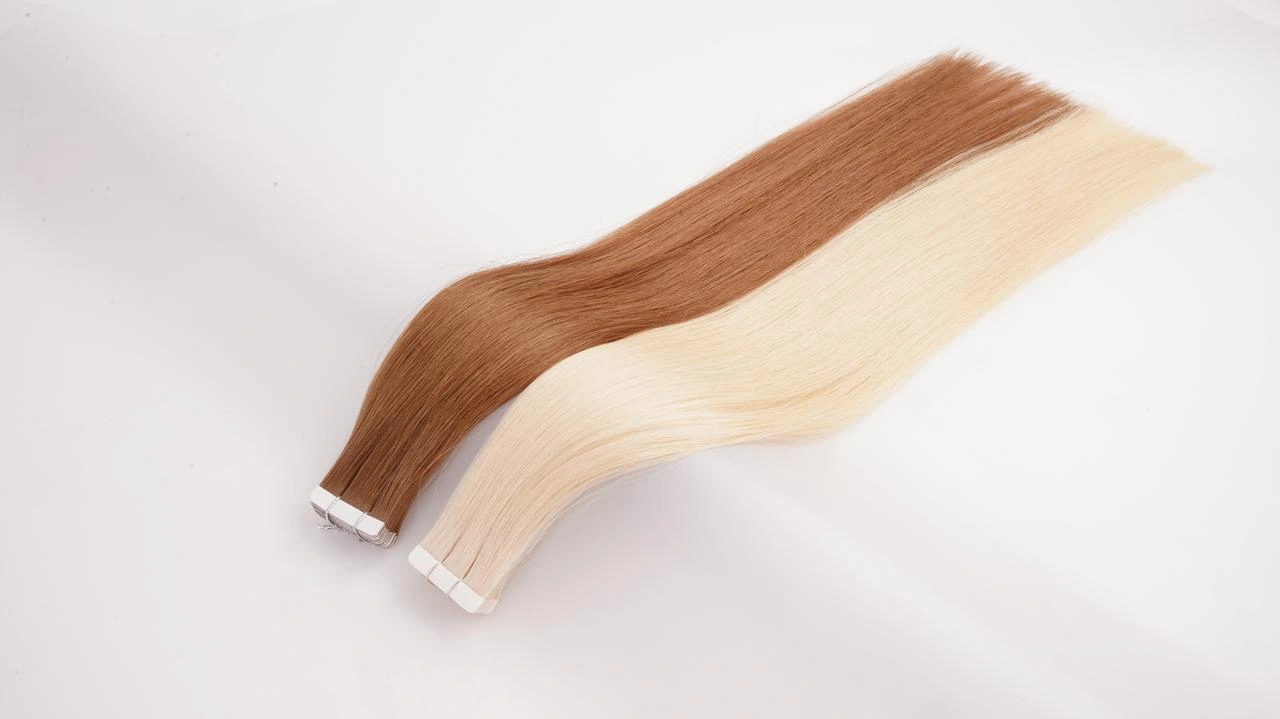
Tape-In Hair Extensions are a common choice for fine-hair clients, especially those trying extensions for the first time, looking for a lightweight volume boost, or wanting a faster installation process. Because the tape tabs are relatively flat, Tape-In extensions can sit close to the head and help create a natural, lightweight result.
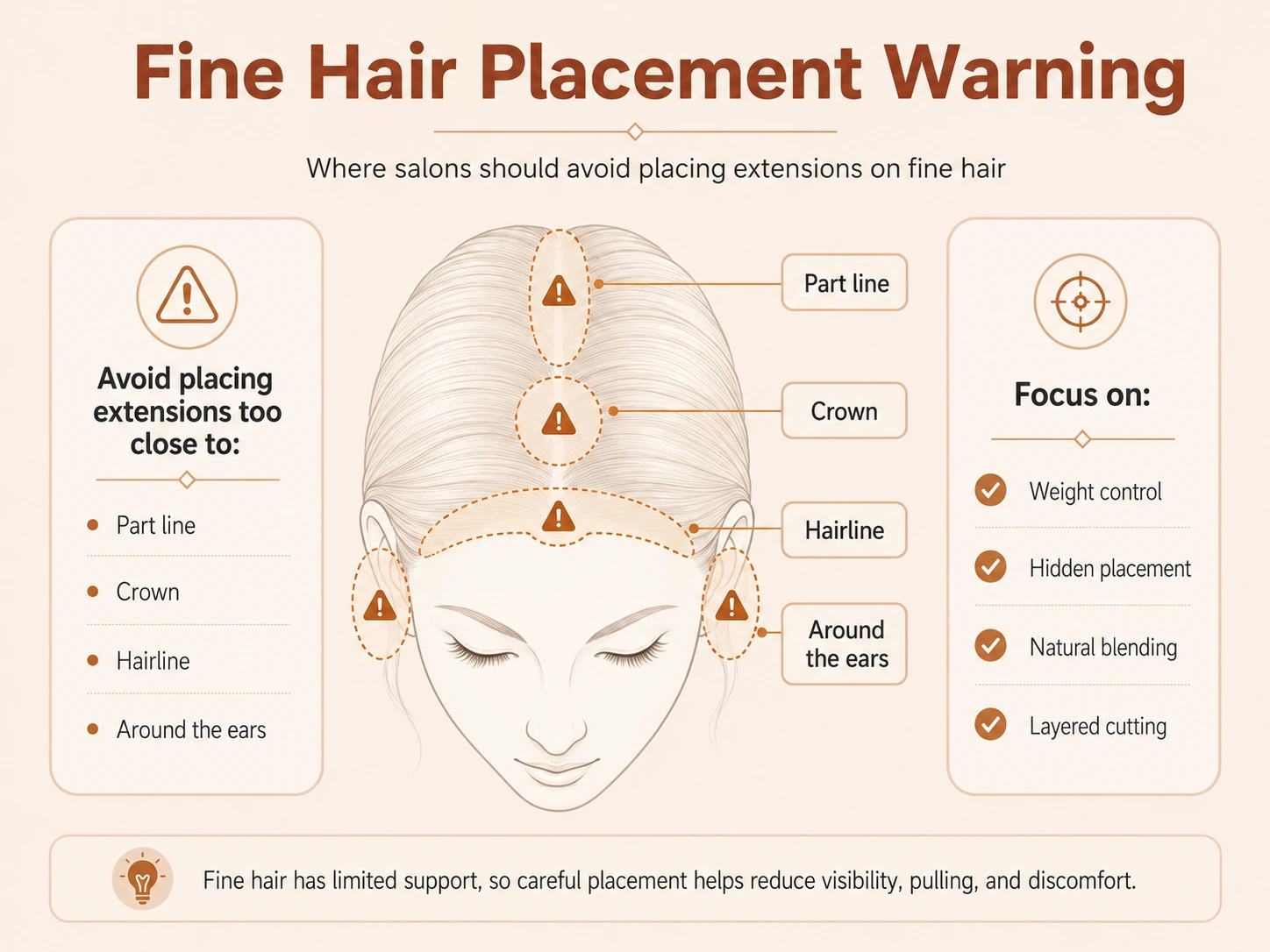
For salons, Tape-In extensions are efficient to install, easier to standardize as a service, and suitable for entry-level extension clients. However, placement is especially important for fine hair. Stylists should avoid placing tape tabs too close to the part line, crown, hairline, or other areas that are easy to expose.
For clients with very fragile hair or weaker support, stylists may also consider the Single-Sided Tape Method. This can help reduce the weight of each attachment point and create a lighter wearing experience, making it more suitable for clients who need extra protection for their natural hair.
I-Tip Hair Extensions
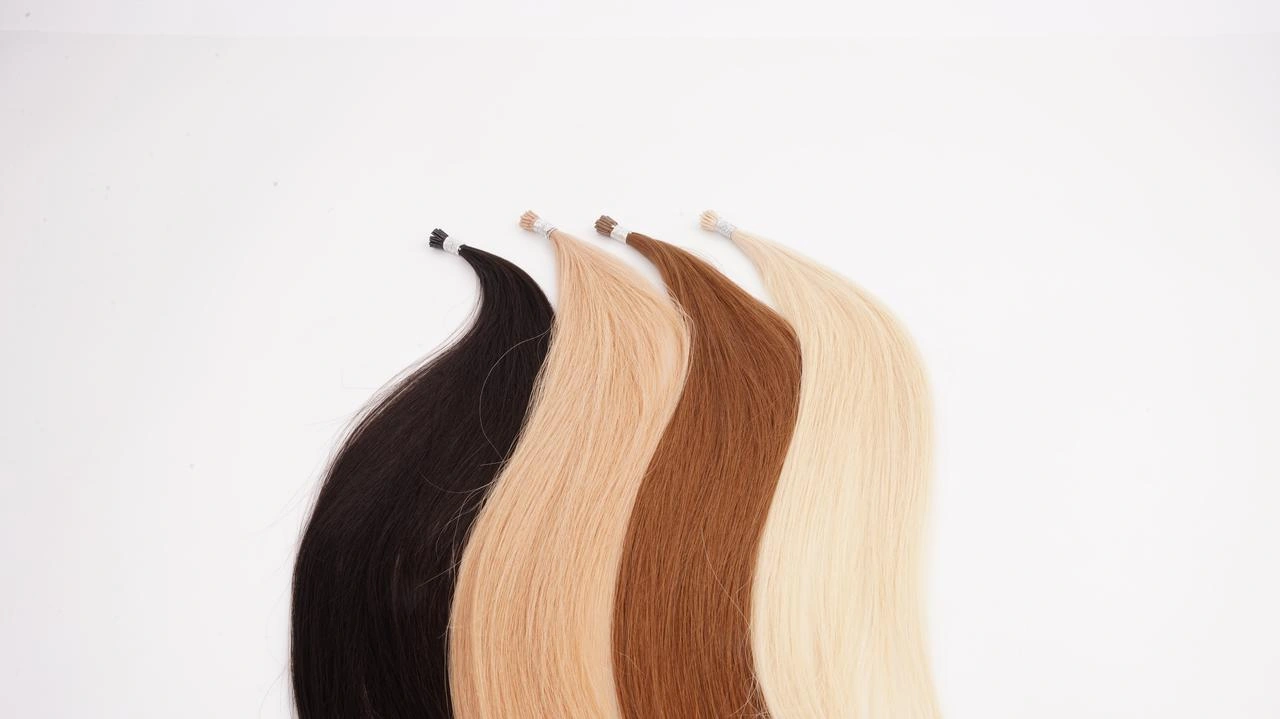
I-Tip Hair Extensions are suitable for fine-hair clients who need localized density, flexible placement, or a non-tape extension option. Since I-Tip extensions are installed strand by strand, stylists can adjust the placement more precisely based on the client’s hair volume distribution and target result.
This method works well for adding volume to specific areas, such as the sides, back of the head, or areas with uneven density. For clients who do not need a full-volume transformation but want more thickness in selected areas, I-Tip can be a practical choice.
However, single-point weight control is very important. Stylists should avoid installing too many strands in one area or placing extensions where the natural hair does not have enough support. Proper sectioning, weight control, and regular maintenance are essential for comfort and stability.
Genius Weft Hair Extensions
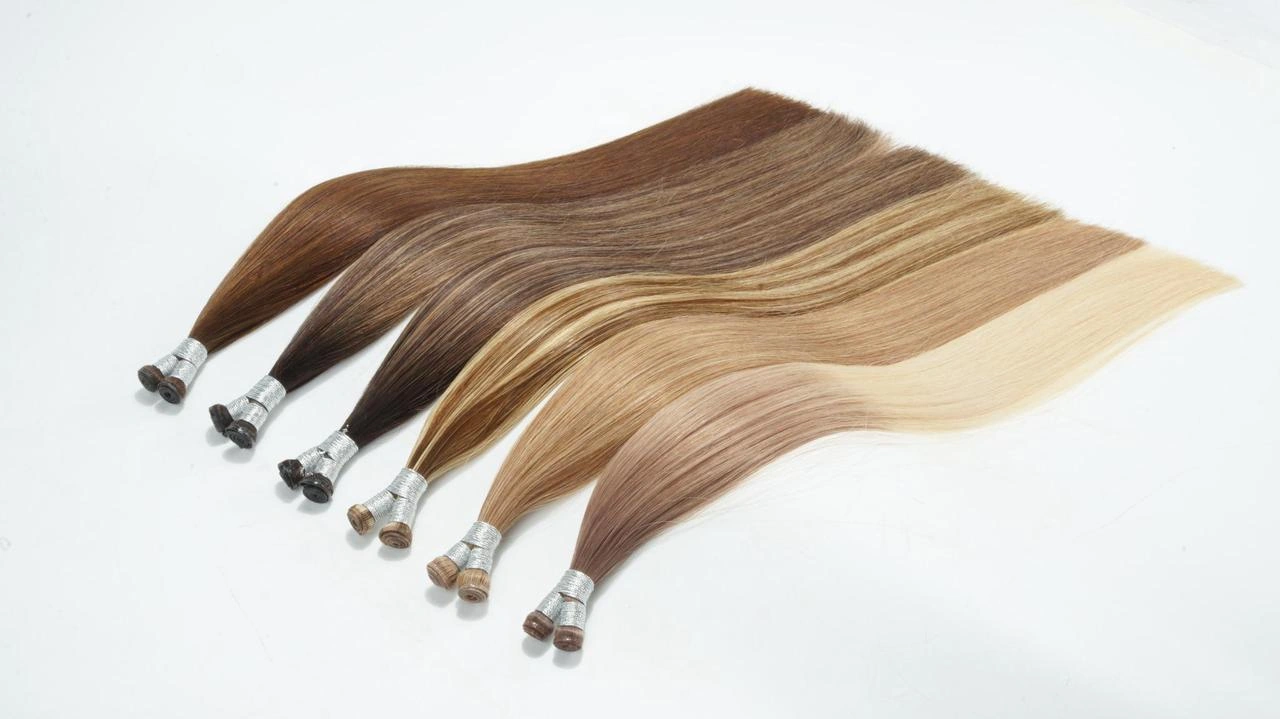
Genius Weft is suitable for fine-hair clients who want a weft extension effect but need a thinner, flatter, and more flexible design. Compared with traditional Machine Weft options, which can feel thicker or heavier, Genius Weft offers a lighter and more customizable weft solution.
For fine-hair clients, the value of Genius Weft is not about adding the maximum amount of hair. Instead, it allows stylists to design the installation more carefully according to the client’s head shape, hair volume, sectioning, and desired result. Salons can adjust the placement and amount used based on the client’s natural hair support, creating a more comfortable and natural-looking finish.
Even with a thinner weft option, professional judgment is still essential. Stylists should control the overall weight, avoid overbuilding thickness, and use layered cutting after installation to help the extensions blend naturally with the client’s own hair.
Hair Extension Recommendation Checklist for Fine Hair Clients
| Client Situation / Assessment Point | Recommended Solution | Reason for Recommendation | Notes |
| Fine strands, but overall hair volume is still adequate | Tape-In / I-Tip / Genius Weft | The client has enough natural hair coverage and support, so the salon can choose a lightweight, localized, or overall volume solution based on the target result. | Control placement carefully to avoid exposed attachment points. |
| Overall hair volume is low, and the client wants a subtle volume boost | Tape-In | Tape tabs are relatively flat, installation is efficient, and the method is suitable for a lightweight, natural entry-level extension service. | Avoid placing tapes too close to the part line, crown, or hairline. |
| Localized lack of volume, such as thinner sides or back sections | I-Tip | Strand-by-strand installation allows flexible placement and precise volume correction in specific areas. | Control weight at each attachment point and avoid installing too densely. |
| Client wants overall volume and length enhancement | Genius Weft | Suitable for clients who want a weft effect but need a thinner and flatter design. | Control the amount used according to the support capacity of the natural hair. |
| Client wants a more natural, flatter weft effect | Genius Weft | Can be customized according to head shape, hair volume, and target result, helping balance fullness and invisibility. | Do not overbuild thickness; layered cutting is needed after installation. |
| Client has weaker maintenance ability and wants a simpler process | Tape-In | The service process is relatively standardized, and the maintenance routine is easier to explain and follow. | Provide clear at-home care instructions before and after installation. |
| Client is willing to maintain regularly and wants a more refined result | I-Tip / Genius Weft | Allows more personalized placement, distribution, and styling design. | Regular salon visits are needed to check attachment points and overall condition. |
Tips for Better Results on Fine Hair
-
Do not add too much hair at one time: Fine hair has limited support, and excessive extensions can cause pulling, heaviness, or an unnatural result.
-
Avoid placing attachment points in visible areas: The part line, crown, hairline, and areas near the ears are more likely to expose attachment points.
-
Plan around the client’s parting and styling habits: If the client often wears a center part, side part, or ponytail, placement should be planned in advance to avoid visible extension marks.
-
Use layered cutting after installation: Proper cutting helps the extensions blend naturally with the client’s own hair and prevents a disconnected look.
-
Manage expectations before installation: Explain the achievable volume, styling effect, and maintenance requirements clearly to reduce misunderstandings.
-
Provide clear aftercare guidance: Teach clients how to brush, wash, blow-dry, and maintain their extensions to help extend the result and reduce after-sales issues.
Example: ESSMEI Tape In Hair Extensions Finished Look Showcase
Q&A
What are the best hair extensions for fine hair?
The best options for fine hair include Tape-In, I-Tip, and Genius Weft extensions. The right choice depends on the client’s natural hair support, scalp visibility, target result, and maintenance ability.
Are Tape-In extensions good for fine hair?
Yes. Tape-In extensions are a popular choice for fine-hair clients because the tape tabs sit relatively flat against the head and can create a lightweight, natural-looking volume boost.
When should salons recommend I-Tip extensions for fine hair?
Salons can recommend I-Tip extensions when clients need localized density, flexible placement, or a non-tape method. They are especially useful for adding volume to specific areas such as the sides or back.
Is Genius Weft suitable for fine hair?
Yes. Genius Weft can be suitable for fine-hair clients who want a weft extension effect but need a thinner, flatter, and more customizable design than traditional machine wefts.
What should salons consider before applying extensions to fine hair?
Salons should assess the client’s hair strand thickness, overall hair volume, scalp visibility, natural hair support, desired result, and ability to maintain extensions properly.
Can fine hair support hair extensions?
Fine hair can support extensions when the right method, amount of hair, placement, and maintenance plan are used. The goal is not to add as much hair as possible, but to create a safe, lightweight, and natural-looking result.
Final Thoughts
Fine-hair clients do not need a universal extension solution. They need the right solution based on hair volume, natural hair support, scalp visibility, target result, and maintenance ability. Tape-In, I-Tip, and Genius Weft each have their own suitable scenarios. With professional assessment and proper product matching, salons can create natural, lightweight, and comfortable extension results while reducing the risk of client complaints.
CTA
Looking for professional hair extension solutions for fine-hair clients? ESSMEI offers salon-ready Tape-In, I-Tip, and Genius Weft extensions to help you create lightweight, natural-looking, and comfortable results for different client needs.
Related Posts
 Butterfly Weft Hair Extensions: 4 Types Compared
18
Butterfly Weft Hair Extensions: 4 Types Compared
Compare four ESSMEI butterfly weft hair extensions—Flip, Invisi Flip, Genius Flip, and Twin-Genius—and choose the right option for each salon client.
Read More Hair Extension Length Chart for Salons: Height, Hair Type & Method Guide
17
Hair Extension Length Chart for Salons: Height, Hair Type & Method Guide
Use this salon-friendly hair extension length chart to recommend lengths by client height, hair type, and extension method during client consultations.
Read MoreComments (0)
No comments yet.