


Hair Extensions for Short Hair: Salon Blending Guide
09
Hair Extensions for Short Hair: A Salon Guide to Natural Blending and Volume
Many clients with short hair have high expectations for their final hair extension results because they are often more eager to see an improvement in their hairstyle. For example, some clients may have recently gotten a short haircut they are not happy with, some may be preparing for a wedding, party, photoshoot, or another special occasion, while others may simply want to get through the awkward grow-out stage from short hair to longer hair more smoothly.
During the transition from short hair to medium-length or longer hair, issues such as flipped-out ends, hard-to-control layers, and an overall shape that is difficult to manage can make clients want to use hair extensions to quickly improve their current styling concerns. As a result, these clients often come to the salon with clear needs and high expectations.
From a professional perspective, however, installing hair extensions on short hair usually requires more careful planning than installing extensions on long hair. Because the client’s natural hair length is limited, covering attachment points, blending lengths, matching color, and creating an overall natural blend can all be more challenging. Therefore, before recommending extensions for a short-haired client, salons and hairstylists should first evaluate the client’s natural hair length, hair density, haircut layers, color match, and desired result to determine whether she is suitable for extensions. They should then choose the appropriate extension method and communicate in advance what can realistically be achieved.
For this reason, hair extensions for short hair are not simply a service for “adding length.” They are more like a customized service that requires professional judgment, solution planning, and expectation management.
Key Takeaways
-
Hair extensions for short hair are possible, but not every short haircut is suitable.
-
If natural hair is very short(shorter than 5 cm), obvious length hair extensions are usually not recommended.
-
A more realistic starting point for short hair extensions is usually around 10–15 cm, depending on hair density, layers, and coverage.
-
Short blunt hair, blunt bobs, and thick ends are harder to blend because they can create visible length breaks.
-
A natural result depends on proper method selection, color matching, density planning, attachment placement, and a professional blending cut.
-
Keratin Bonds, Genius Weft, and Tape-In extensions can be considered for short-haired clients when there is enough natural hair coverage.
Can Short-Haired Clients Wear Extensions?
Yes, but not all short hair is suitable for extensions.
Evaluation Criteria
1. Absolute Length
Generally speaking, if the client’s natural hair is shorter than 5 cm, it is usually difficult to provide enough upper-layer coverage to hide the attachment points, so obvious length extensions are not recommended. A more realistic starting point for short hair extensions is usually around 10–15 cm, but this still needs to be evaluated based on hair density, haircut layers, and upper-layer coverage.
2. Thickness of the Ends
In addition to length, the condition of the ends also directly affects how natural short hair extensions will look. Short hair with ends that are too thick or too blunt, such as a blunt bob, can easily create a visible disconnection after extensions are added. On the other hand, short hair with ends that are too thin or too choppy, such as an overly thinned pixie cut or choppy short layers, may not have enough coverage to hide the attachment points. Therefore, the ideal short-hair extension candidate usually has some thickness at the ends, but the line should not be too blunt, and the hair should be able to transition naturally through a blending cut.
3. Scalp Condition and Natural Hair Support
During an extension consultation, salons and hairstylists should evaluate the client’s scalp condition and the ability of the natural hair to support extension attachments. If the client has visible redness, discomfort, wounds, suspected folliculitis, or other scalp abnormalities, extension services should be postponed, and the client should be advised to seek professional medical guidance where necessary. If the main concern is severe bleach damage, large areas of breakage close to the roots, or weakened natural hair support, salons should recommend improving the hair condition first. Suitability for extensions should then be reassessed once the scalp and hair condition have stabilized.
4. Gap Between Current Length and Target Length
If the gap between the client’s current short hair length and target length is too large, for example more than 30–40 cm, the blending difficulty will usually increase significantly. This type of situation can be considered a high-difficulty short-hair extension request because the larger the gap between the natural short hair and the extensions, the harder it becomes to control attachment coverage, end blending, and overall naturalness. For these clients, salons should not casually promise a dramatic length transformation in one session. Instead, they should consider a more conservative target length or use a staged transition plan.
(Note: The values above are for reference only and are not fixed industry rules.)
Types of Short Hair That Are More Suitable for Extensions
Short hair that is more suitable for extensions usually needs to have a certain amount of natural hair length, hair density, and upper-layer coverage. For example, short hair that is close to shoulder length, has moderately thick ends, and does not have an overly blunt line is usually easier to blend naturally with extensions. However, before installation, salons and hairstylists still need to evaluate the client’s natural hair length, hair volume, condition of the ends, color match, and desired result.
Why Short Hair Extensions Are Harder to Blend
Limited Coverage Makes Attachment Points Easier to Expose
Today, more and more extension clients want their final hair extensions result to look natural, seamless, and invisible. However, for short-haired clients, especially those whose natural hair is only around 5–10 cm long, the top and outer layers of natural hair often cannot provide enough coverage to hide the attachment points.
This is one of the reasons why short hair extensions require a higher level of salon expertise. What the client sees is the desire for a longer, fuller, and more natural-looking result. What the stylist actually needs to solve is how to control attachment placement, reduce the risk of exposure, and make the overall hairstyle look more natural while minimizing the visible gap between the client’s natural short hair and the extensions, all within the limitations of the client’s existing hair length.
Therefore, during a short-hair extension consultation, salons should not only consider how long the client wants her hair to be. They should first evaluate whether she has enough upper-layer coverage. If coverage is insufficient, even if the client has high expectations for the final result, the stylist needs to communicate in advance the realistic level of naturalness that can be achieved to avoid exposed attachment points or unsatisfactory blending after installation.
Blunt or Choppy Ends Can Create Visible Length Breaks
On one hand, short hairstyles such as a standard bob or blunt bob usually have a clear horizontal cut line and a heavy weight line at the ends. If extensions are added directly to this type of haircut, the client’s natural short hair can easily sit like a “cap” over the extensions, creating an obvious length break and visible line of separation.
On the other hand, if the client has a pixie cut, highly layered short hair, or choppy short layers, and the crown or outer layers are cut too short or too choppy, blending becomes more difficult. Because these short, choppy pieces lack enough length and weight to fall smoothly, they may flip out, puff up, or create uncontrolled layers after extensions are installed, making it difficult for them to blend naturally with the smoother lines of the extensions.
For these short-haired clients, salons and hairstylists should first determine what type of hard-to-blend short haircut they are working with. If the client has a blunt bob, a straight-across short cut, or a haircut with a heavy weight line, the stylist should usually consider softening the ends through cutting, thinning, or layering to prevent the natural short hair from creating a visible break over the extensions.
If the client has a pixie cut, highly layered short hair, or choppy short layers, the focus should be on evaluating whether the crown and outer layers have enough coverage. If the upper layers are too short or too choppy, both the attachment points and the choppy layers may be more likely to show. These clients are usually better suited for a more conservative target length or should wait until their natural hair grows longer before being reassessed.
Therefore, before installing extensions on short hair, three points should be carefully evaluated: whether the ends need to be softened, whether upper-layer coverage is sufficient, and whether the target length is realistic. The key to short hair extensions is not simply pursuing more length, but using the right length, sectioning, color matching, and blending cut to create a more natural transition between the client’s natural short hair and the extensions.
Short Hair Requires More Careful Density Planning and Blending Cuts
Short hair extensions usually require more precise density planning than long hair extensions. For clients with a blunt bob, thick short hair, or a large gap between current length and target length, salons may need to use more hair than they would for a standard extension application to balance the heavy outline of the natural short hair, reduce length breaks, and make the ends look more naturally full. Some extremely high-difficulty short-hair lengthening cases may approach 180g–250g, but the exact amount should still be determined based on the client’s natural hair density, thickness at the ends, support capacity of the natural hair, scalp comfort, and target length, rather than simply assuming that “more hair means a more natural result.”
How to blend hair extensions with short blunt hair:
The area where the natural short hair overlaps with the extensions may create localized bulk, so the blending cut after installation is extremely important. Through point cutting, slide cutting, controlled weight removal, or feathering, hairstylists can soften the ends of the natural hair, break up harsh cut lines, and create a more natural density transition between the short hair and the extensions.
Best Hair Extension Methods for Short Hair Clients
Keratin Bonds
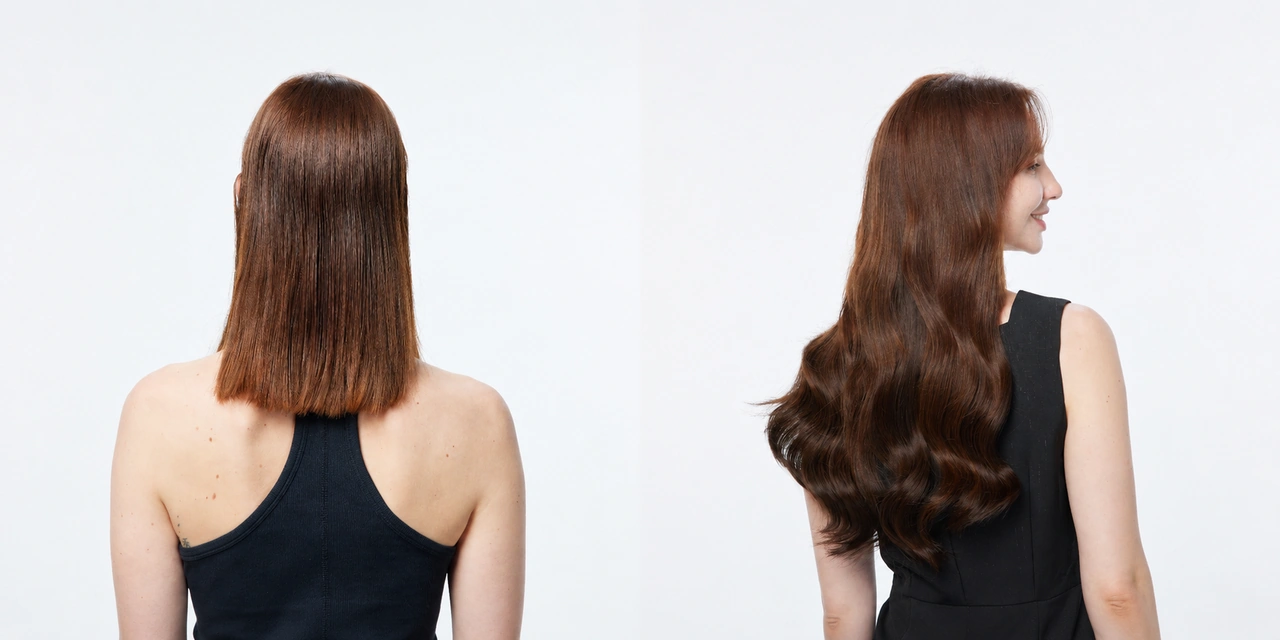
For clients whose natural hair is shorter at the crown and upper back sections, covering attachment points is often one of the main challenges in short hair extensions. The advantage of Keratin Bonds is that the strand-by-strand installation is more flexible, the attachment points can be made relatively small, and the placement can be customized more precisely according to the client’s head shape, hair distribution, and layered structure.
Therefore, when the client has sufficient coverage, Keratin Bonds are more suitable for short-haired clients who need localized volume, detailed blending, or customized sectioning. However, salons still need to be cautious around high-exposure areas such as the hairline, temples, and part line to avoid placing the bonds too high or too close to the surface.
Genius Weft
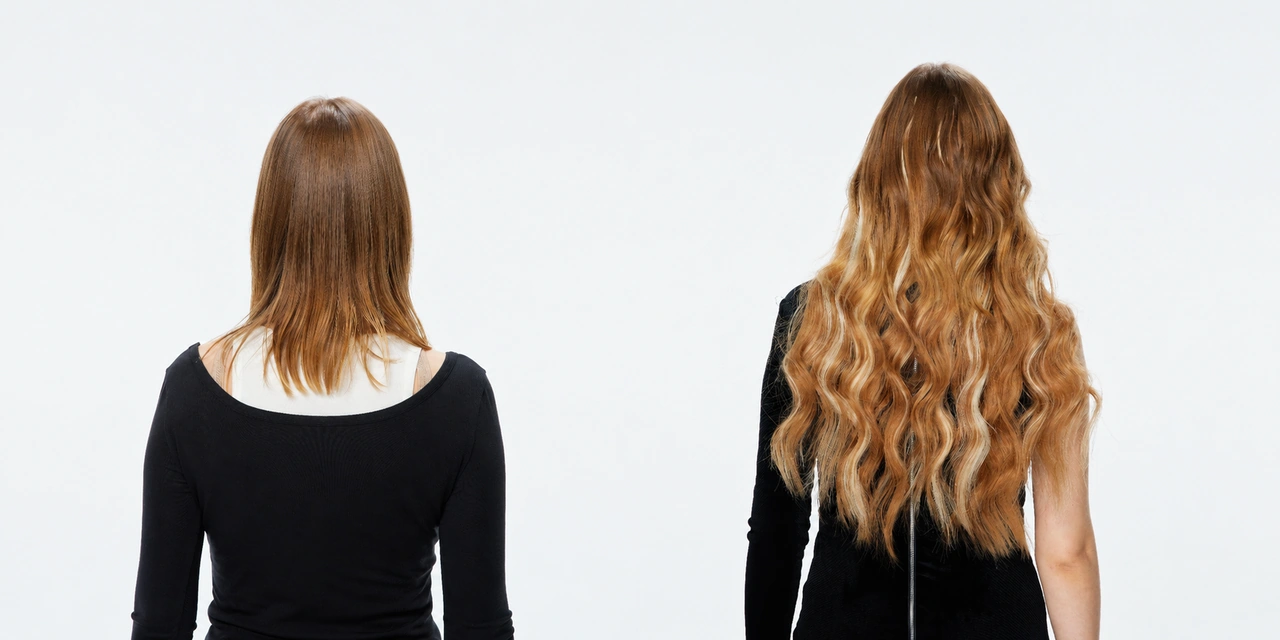
For clients with a short blunt bob, thick short hair, or a heavy weight line at the ends, visible length breaks can easily appear after short hair is extended. To improve this issue, Genius Weft may be one of the best hair extension solution worth considering because it is thin and flat while also providing more continuous volume support. This can help balance the heavy outline of the client’s natural short hair and make the overall ends look fuller and more balanced.
Because the product itself supports cutting, salons can also adjust the weft length according to the client’s head shape, sectioning plan, and installation path, making the installation better fit the client’s head shape. However, the client must have enough natural hair length and coverage to hide the weft track; otherwise, weft extensions may also be exposed.
Tape-In
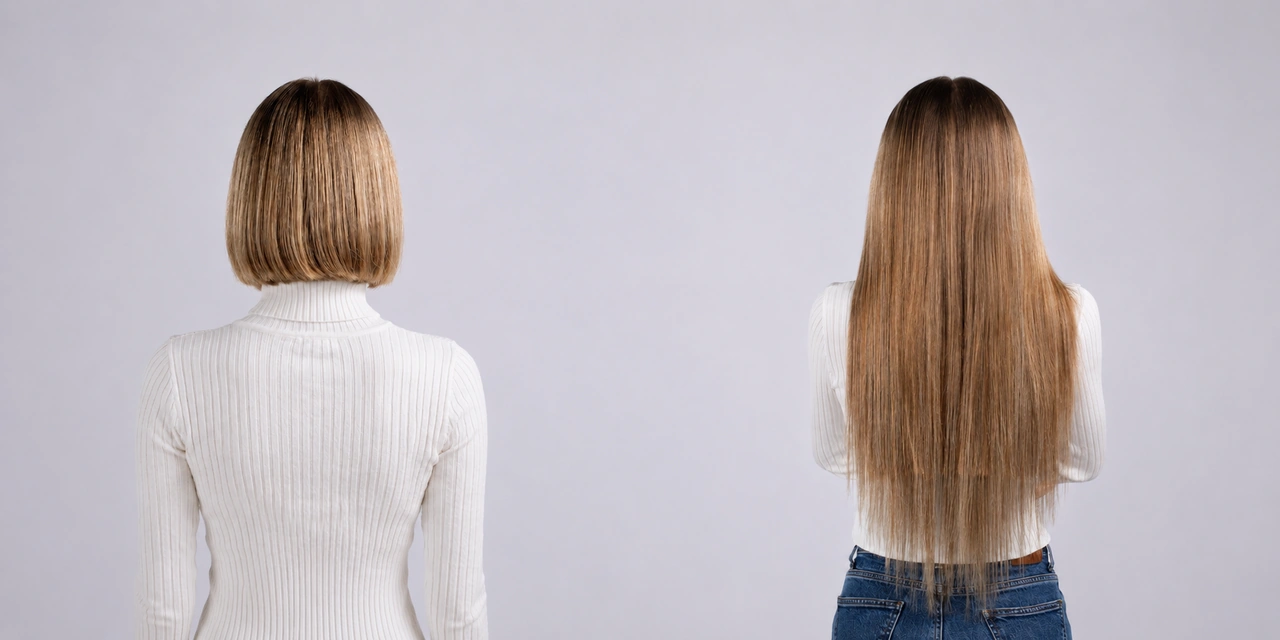
For clients with a bob, lob, or short hair that needs lightweight volume on the sides and still has a certain level of coverage, Tape-In can be used as a lightweight, flat transition hair extension option. Its panel-like structure helps add some volume in local areas, making the sides or ends look fuller and improving the less natural front and side blending that can happen after short hair is extended.
However, Tape-In also requires enough upper-layer coverage. If the client’s side hair is too short, too thin, or too choppy, the tape panels may still be exposed. Compared with strand-by-strand methods, Tape-In’s wider contact area helps distribute localized tension, but salons still need to control the amount used, placement, and target length to avoid putting too much pressure on the client’s natural hair.
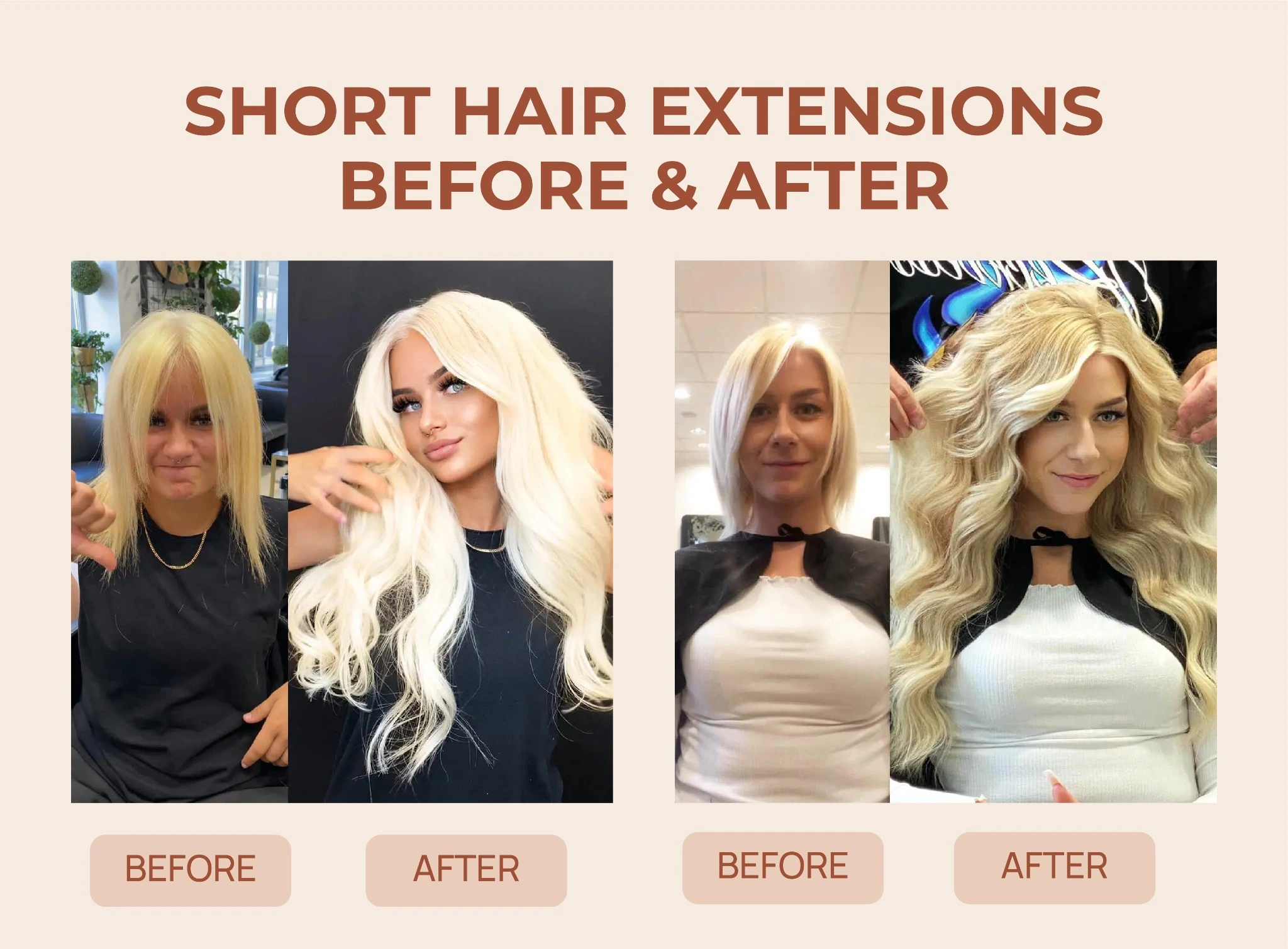
Short Hair Extension Before After By ESSMEI
Q&A
Can you get extensions with short hair?
Yes. You can get extensions with short hair, but the stylist must first evaluate the client’s natural hair length, density, haircut layers, color match, scalp condition, and desired result.
What is the minimum hair length for extensions?
If the natural hair is shorter than 5 cm, obvious length extensions are usually not recommended. A more realistic starting point is usually around 10–15 cm, depending on coverage, density, and layers.
Can you get hair extensions with very short hair?
Very short hair is more difficult to extend because there may not be enough upper-layer coverage to hide the attachment points. The stylist should evaluate whether a natural-looking result is realistic before installation.
Why are hair extensions for short hair harder to blend?
Short hair extensions are harder to blend because attachment points are easier to expose, and blunt or choppy ends can create visible length breaks between the natural hair and the extensions.
How to blend extensions with short blunt hair?
To blend extensions with short blunt hair, the stylist may need to soften the blunt ends through point cutting, slide cutting, controlled weight removal, or feathering after installation.
What are the best hair extensions for short hair?
Keratin Bonds, Genius Weft, and Tape-In extensions can all be considered for short-haired clients. The best choice depends on the client’s natural hair length, density, coverage, haircut shape, and target result.
Choosing the Right Professional Extension Products for Short-Haired Clients
Short hair extensions place higher demands on product selection, color matching, density planning, and installation technique. ESSMEI provides professional wholesale human hair extension products for salons, including Tape-In, Genius Weft, and Keratin Bond hair extensions, helping salons choose more suitable extension solutions based on the needs of different short-haired clients.
Contact wholesale hair extensions manufacturer ESSMEI to request wholesale pricing, color charts, sample kits, or product recommendations for your salon extension services
Related Posts
 Butterfly Weft Hair Extensions: 4 Types Compared
18
Butterfly Weft Hair Extensions: 4 Types Compared
Compare four ESSMEI butterfly weft hair extensions—Flip, Invisi Flip, Genius Flip, and Twin-Genius—and choose the right option for each salon client.
Read More Best Hair Extensions for Fine Hair: Tape-Ins, I-Tips & Genius Wefts
22
Best Hair Extensions for Fine Hair: Tape-Ins, I-Tips & Genius Wefts
Discover the best hair extensions for fine hair clients. Compare Tape-In, I-Tip, and Genius Weft extensions to help salons create lightweight, natural, and comfortable results.
Read MoreComments (0)
No comments yet.