


Do Hair Extensions Damage Hair?
08
Do Hair Extensions Damage Hair? A Salon Guide to Preventing Installation, Removal & Product Complaints
Many hair extension salon owners have probably heard this question from extension clients before: “Will hair extensions damage my natural hair?”
It is a sensitive question. From a professional point of view, high-quality hair extensions usually do not damage a client’s natural hair when the right product is selected, installation tension is properly controlled, maintenance is performed regularly, and removal is handled by a trained professional.
However, if the product quality is unstable, the extensions are installed too tightly, the strands are too heavy, aftercare is improper, or the removal process is unprofessional, the risk of breakage, tangling, pulling discomfort, and even traction-related hair loss may increase.
To help salons better address client concerns and reduce service disputes, ESSMEI has created this guide to preventing extension-related complaints. Our goal is to help salons improve service quality through better product selection, installation details, client communication, aftercare guidance, and maintenance support. In turn, salons can reduce complaint risks, improve client satisfaction and retention, and build more stable, sustainable profitability.
Key Takeaways: Do Hair Extensions Damage Hair?
-
Hair extensions do not usually damage natural hair when they are selected, installed, maintained, and removed correctly by a trained professional.
-
The main causes of hair extension damage complaints are poor installation, excessive tension, too much weight, incorrect removal, and unstable product quality.
-
Salons should check scalp tension, attachment placement, strand weight, and client comfort before the client leaves the appointment.
-
Professional hair extension removal is essential because forceful at-home removal can cause pulling, breakage, shedding, and glue or bond residue.
-
Non-Remy or over-processed hair extensions can lead to tangling, matting, dryness, and higher complaint risks after washing and daily wear.
-
High-quality Remy human hair extensions can help salons reduce tangling, matting, shedding, slippage-related complaints, and repeat-service problems.
Summary: Installation, Removal and Product Issues That May Cause Hair Extension Damage Complaints
| Issue Type | What It Means | Common Causes | Possible Client Complaints | How Salons Can Prevent It |
| Installation Issue | Installation issues happen when hair extensions are placed with too much tension, poor sectioning, unsuitable weight, or incorrect attachment placement. | Attachments placed too close to the scalp, excessive tension, heavy strands, poor weight distribution, unsuitable section size, or choosing too much hair for fine or fragile hair. | Scalp tightness, pulling discomfort, soreness, root breakage, thinning in stressed areas, hair extension slippage, or the feeling that the extensions are too heavy. | Salons should check scalp comfort, attachment movement, strand weight, placement, and tension before the client leaves. For fine, soft, or flat hair, the extension plan should match the client’s density, strength, and weight-bearing capacity. |
| Removal Issue | Removal issues happen when extensions are taken out without the correct professional remover, softening time, or removal technique. | At-home removal, forceful pulling, aggressive brushing during removal, not dissolving adhesive or bonds properly, using the wrong remover, or leaving glue or bond residue on the hair. | Hair pulled from the root, shedding, breakage, thinning, leftover glue residue, bond residue, discomfort, or fear that the extensions damaged the natural hair. | Salons should explain that hair extension removal is a professional process. Tape-ins, K-tips, I-tips, and other methods should be softened or dissolved first, then removed gently with the correct salon-grade remover and technique. |
| Product Issue | Product issues happen when the extension hair quality is unstable, over-processed, non-Remy, or heavily coated to look smooth at first. | Non-Remy hair, misaligned cuticles, heavy acid treatment, silicone coating loss, inconsistent hair quality, dryness, roughness, or weak attachment-point quality. | Tangling, matting, dryness, roughness, shedding, frizz, hair that becomes difficult to manage after washing, or complaints that the extensions ruined the client’s hair. | Salons should avoid choosing hair extensions based only on low price. High-quality Remy human hair extensions with better cuticle alignment can help reduce tangling, matting, shedding, rework, and product-related complaints. |
Hair Extension installation and Removal Issues vs. Hair Extension Product Issues
When an upset client returns to the salon, points to frizzy, tangled hair, and says, “These extensions ruined my hair.” the first thing a salon should do is not immediately defend itself. Instead, the salon should use a professional inspection process to help identify the real source of the problem.
In many cases, what clients describe as “extension damage” may actually fall into two very different categories: Hair Extension installation and Removal Issues or hair extension product issues:
Hair Extension installation and Removal Issues
This usually refers to problems caused by poor placement, excessive tension, unsuitable section size, too much extension weight, uneven weight distribution, or removal without the correct professional remover and technique. Common signs may include scalp tightness, pulling discomfort, soreness around the attachment points, root breakage, thinning in stressed areas, unusual shedding, or residue left on the hair after removal.
Hair Extension Product Issues
This usually refers to problems caused by unstable extension hair quality or excessive processing. Signs may include dryness, roughness, frizz, tangling, matting, shedding, or hair that feels smooth at first but becomes difficult to manage after a few washes.
Common product-related causes include non-Remy hair, misaligned cuticles, heavy acid treatment, silicone coating loss, or inconsistent hair quality. These issues can increase brushing friction and may lead to more pulling on the client’s natural hair during daily care or removal.
Installation and Removal Issues that May Increase the Risk of Natural Hair Damage Complaints
Too Much Tension on the Scalp
When installing hair extensions, salons need to pay close attention to one key detail: the attachment point should not sit too close to the scalp. In real client discussions, this concern appears when someone reports that extensions were installed very close to the scalp and the client is already in pain on the same day. Even methods known for an invisible finish, such as tape-ins and keratin bonds, still need to be installed with appropriate spacing and tension control.
If the attachment point is placed too close to the scalp, it can restrict the natural growth direction of the client’s hair and may cause ongoing tightness, pulling, or scalp discomfort during daily wear. Over time, this continuous tension may increase the risk of natural hair breakage or traction-related damage.
Salons should also remind clients to be careful with hairstyles during the first few days after installation. Many clients want to wear a high ponytail immediately after getting extensions, but the hair and attachment points need time to settle. For the first few days, it is better to let the hair fall naturally or choose low-tension styles such as a low ponytail or low bun. This helps avoid premature pulling on the attachment points and reduces the risk of scalp discomfort and traction-related damage.
Advice for salons:
Before the client leaves the salon, the stylist should proactively ask whether the client feels any obvious tightness, pulling, pain, or scalp discomfort. A slight settling feeling may happen after a new installation, but the attachment points should not feel painfully tight, restrict the natural movement of the hair, or create constant tension on the scalp.
The stylist should also check whether the extensions can move naturally in different directions and lie flat against the head without pulling. If certain areas feel too tight, painful, or difficult to move, the attachment points should be checked and adjusted right away. Possible causes may include fittings placed too close to the scalp, excessive weight, incorrect tension, unsuitable placement, or sensitivity to certain installation materials.
This not only improves the client’s immediate experience, but also helps salons solve potential problems before they turn into complaints. Compared with having a client go home, feel uncomfortable, book another adjustment, or leave a negative review, checking and adjusting the extensions before the client leaves can greatly reduce follow-up communication costs, after-sales disputes, and reputation risks.
Poor Tension Control and Attachment Placement
Based on real hair extension cases, one fine-haired client reduced her nano extensions from around 120 strands to about 100 because the original set felt too heavy, yet she still lost 42 extensions within 5 weeks.
This shows why salons should not decide extension volume only by the desired fullness. Some clients with fine, soft, or flat hair may want more extensions for a fuller look, but their natural hair may not have enough strength to support too much added weight. If the extension weight exceeds what fine or fragile hair can safely carry, long-term pulling may increase the risk of breakage, thinning, hair extension slippage, or further weakening of the client’s own hair. In some cases, this can create a cycle where the client wants more volume because the hair looks thin, but adding too much weight creates even more stress on the natural hair.
Advice for salons:
For clients with fine, soft, or flat hair, the extension plan should not focus only on creating volume. Salons should also assess the density, strength, and weight-bearing capacity of the client’s natural hair. By controlling the total extension weight and distribution, salons can create a fuller look while reducing the risk of pulling damage, breakage, and slippage. This helps clients maintain healthier, more sustainable extension results. For more guidance on choosing extension methods, salons can refer to Blog 6: Best Hair Extensions for Fine Hair: Tape-ins, I-tips and Genius Wefts, Choosing the Right Solution for Every Client.
Incorrect Removal
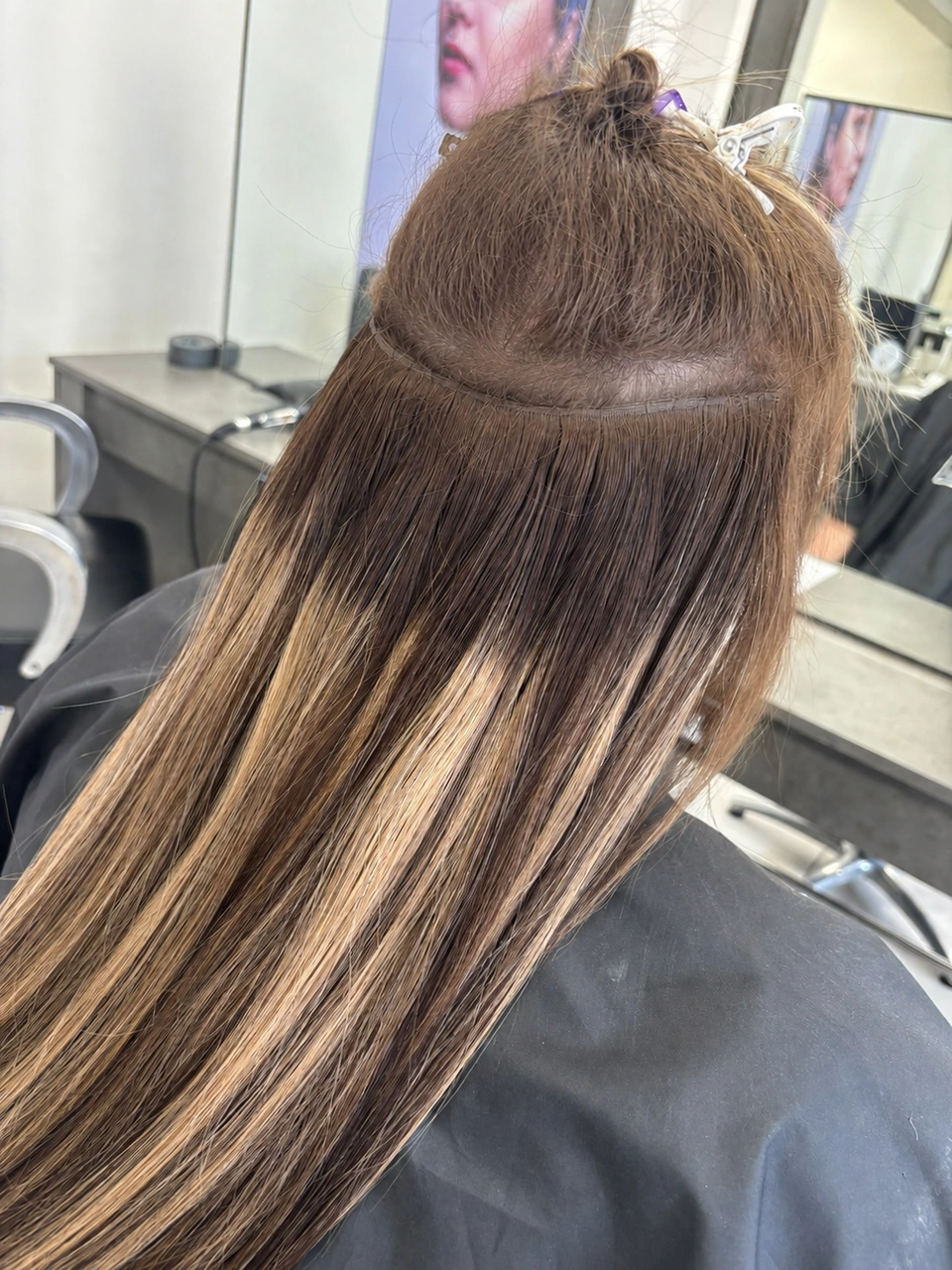
In real extension removal cases, some clients have tried to remove keratin glue extensions at home and found that the bonds came out while pulling natural hair from the root. Some also reported losing a lot of hair during the process or leaving glue residue behind because they did not have the right remover or technique. This shows why extension removal is not simply a matter of “taking them out.” There are real risks involved.
Different extension methods usually require the correct professional remover and proper removal technique. If clients try to remove extensions themselves, they may not understand the process or control the force correctly. This can lead to aggressive removal, forceful pulling, repeated friction, or residue left on the hair, all of which may put extra stress on the natural hair.
Unprofessional removal can be just as damaging as poor installation. In some cases, it may cause more direct pulling, breakage, shedding, thinning, or leftover glue and bond residue, and it may even affect whether the client’s hair is suitable for future extension services.
Advice for salons:
Salons should consider providing every extension client with an “Extension Care and Removal Guide.” This guide should clearly explain that different extension types, such as tape-ins, K-tips, and I-tips, require the correct salon-grade remover and proper removal technique. Clients should understand that extension removal is not about pulling the extensions out. It is a professional process that involves dissolving or softening the attachment points before removing them with the correct technique.
At the same time, salons can package removal as a “natural hair care experience.” For example, after removing the extensions, the salon can offer residue removal, scalp cleansing, or nourishing hair treatment. This helps clients see the appointment not just as extension removal, but as a service that restores and cares for their natural hair. It can also increase the client’s willingness to return to the salon, while adding service value and increasing the average ticket.
Product Quality Factors That Can Lead to Complaints
Non-Remy or Over-Processed Hair
Low-cost hair extensions often use hair with cuticles running in different directions. When the cuticles are not aligned, the hair is more likely to catch on itself during washing, brushing, and daily friction, leading to tangling, roughness, and matting.
To hide this flaw, some low-quality hair may be heavily acid-treated to strip away the cuticle and temporarily make the surface feel smoother. However, once the cuticle is over-processed, the protective structure of the hair shaft becomes weaker, moisture retention decreases, and the hair is more likely to become dry, frizzy, rough, and fragile over time.
Some factories also apply a heavy silicone coating to make the extensions look shiny and smooth when they first arrive. But after the client washes the hair a few times, the silicone coating gradually wears off, and the original dryness, roughness, and tangling problems become obvious.
When extensions frequently tangle or mat, clients often need to use more pulling force during brushing, washing, and removal. This repeated tension not only affects the extension hair itself, but may also pull on the client’s natural hair connected to the extensions, increasing the risk of breakage, shedding, and natural hair damage.
Advice for salons:
When purchasing hair extensions, salons should avoid focusing only on the lowest price. Extension services depend heavily on repeat clients and long-term retention. If the hair quality is unstable, problems such as hair extensions tangling, dryness, complaints, rework, and damage to the salon’s reputation can follow.
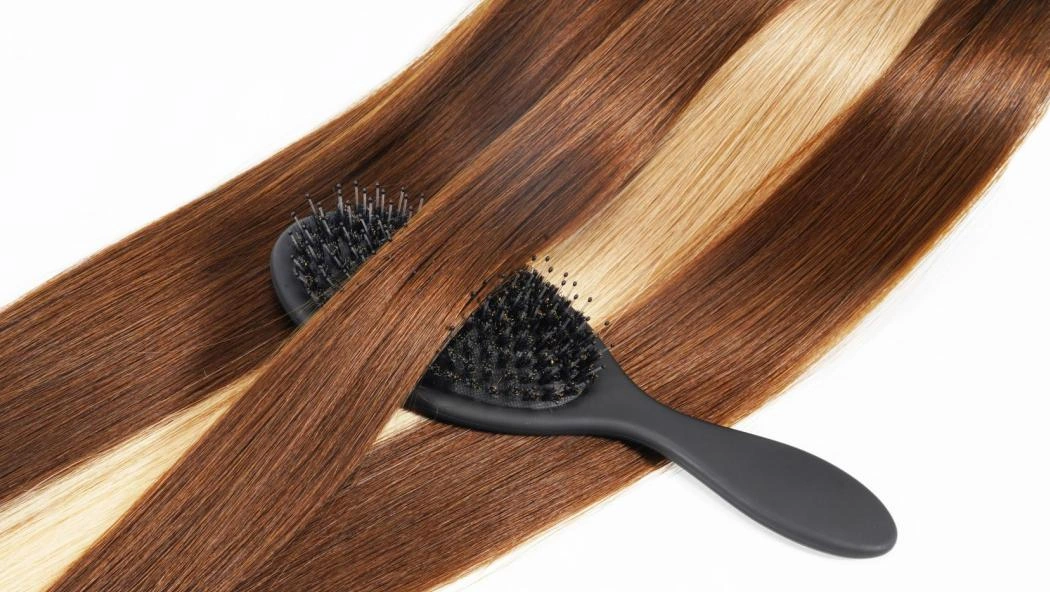
That is why salons may want to prioritize 7 star high-quality Human Remy braided hair. Because this type of hair is collected with more consistent cuticle alignment, it does not require excessive acid treatment or a heavy silicone coating to look naturally smooth, healthy, and shiny. It is more suitable for long-term wear and professional salon services.
FAQ: Do Different Types of Hair Extensions Damage Hair?
1. Do Tape-In Hair Extensions Damage Your Clients’ Hair?
No, not when they are installed, maintained, and removed correctly. Tape-in extensions do not necessarily damage natural hair. The risks usually come from unstable tape quality, oil residue in the installation area, incorrect tape placement, removal without a matching professional remover, not allowing enough processing time to soften the adhesive, or clients applying conditioner or hair oil directly to the tape area. These situations may cause slippage, adhesive residue, pulling, or even natural hair breakage.
2. Do Sew-In Weft Extensions, Including Wefts, Hand-Tied Weft, and Genius Weft, Damage Your Clients’ Hair?
No, not when the weight, placement, and installation tension are properly controlled. Weft, Hand-Tied Weft, and Genius Weft extensions can usually be worn safely when they are planned according to the client’s natural hair density, strength, and maintenance schedule.
However, the main risks come from using more weft hair than the client’s natural hair can support in order to create more volume, installing the wefts too tightly, not drying the roots completely, or clients failing to return for regular maintenance. These problems may lead to scalp pulling, root matting, wearing discomfort, or natural hair breakage.
3. Do I-tip, Y-tip or Nano Ring Extensions Damage Your Clients’ Hair?
No, not when the bead or ring size, tip thickness, strand weight, and installation technique are properly matched. Because I-tip, Y-tip and Nano Ring extensions are cold extension methods, they usually do not require heat or glue during installation.
However, with Nano Ring extensions, salons should also pay attention to the connection stability between the wire and the tip. In some products made with less mature production methods, the wire may slip out from the tip during wear, brushing, or pulling, causing the extension strand to loosen, slide down, or fall out.
ESSMEI nano ring extensions use an improved production process to strengthen the wire-tip connection, helping salons provide a more secure and reliable extension service.
4. Do Keratin Bond, including U-tip Extensions Damage Your Clients’ Hair?
No, not when they are installed and removed by a trained professional. Keratin Bond extensions, also known as U-tip extensions, do not damage the hair by themselves. However, salons still need to consider several factors, including heat installation, bond size, removal method, and the client’s aftercare routine.
If the installation temperature, bond size, or amount of natural hair used per section is not properly controlled, local pressure may increase. This is especially important during removal. If the bond is not properly softened and is pulled out by force, natural hair breakage may occur.
5. Do Clip-in Extensions Damage Your Clients’ Hair?
Usually no, especially when they are worn temporarily and removed before sleeping. Clip-in extensions might be one of the safest extension types and are relatively less likely to damage natural hair. However, clip-in extensions are usually better suited for temporary wear. If a client wears them for long periods every day, clips them into the same area repeatedly, sleeps with them in, or uses pieces that are too heavy, they may still place pressure on localized areas of natural hair. For clients with fine or fragile hair, clip-in wear time should also be controlled, and clients should avoid sleeping in them.
Match Your Skilled Technique with a Product Foundation You Can Trust
Protecting a client’s natural hair depends not only on the stylist’s professional installation, maintenance, and removal technique, but also on stable, high-quality extension products.
For salons looking for more reliable professional hair extensions, ESSMEI offers premium 7 star Remy human hair extensions designed for salon services, repeat clients, and long-term wear. As a B2B wholesale hair extensions supplier, we help salons reduce complaints related to hair extensions tangling, matting, shedding, and unstable attachment points.
Choose more reliable extension products so every client’s return visit feels more like a beauty refresh, not an after-sales problem.
Related Posts
 Butterfly Weft Hair Extensions: 4 Types Compared
16
Butterfly Weft Hair Extensions: 4 Types Compared
Compare four ESSMEI butterfly weft hair extensions—Flip, Invisi Flip, Genius Flip, and Twin-Genius—and choose the right option for each salon client.
Read More Best Hair Extensions for Fine Hair: Tape-Ins, I-Tips & Genius Wefts
22
Best Hair Extensions for Fine Hair: Tape-Ins, I-Tips & Genius Wefts
Discover the best hair extensions for fine hair clients. Compare Tape-In, I-Tip, and Genius Weft extensions to help salons create lightweight, natural, and comfortable results.
Read MoreComments (0)
No comments yet.