


Wholesale Hair Extensions: 4 Quality Checks for Salons
016
Wholesale Hair Extensions: What Salons Should Check Before Buying in Bulk
When buying wholesale hair extensions, some salons easily fall into a common misconception: they focus only on price, length, color, and hair volume. This can create problems for salons. Some colors may look right, but batch consistency may not be reliable. Some hair extension products may appear full and voluminous, but the actual hair weight may be inaccurate.
For salons, these hidden issues can lead to obvious color differences during refills, ends that are not full enough after installation, more client complaints, higher rework costs, and ultimately, lower client satisfaction and repeat purchase rates. What truly helps improve client satisfaction and repeat purchases is often the detailed quality control behind issues such as color differences, inaccurate weight, specific product types not meeting quality standards, and thin ends.
Key Takeaways
-
When buying wholesale hair extensions, salons should check more than price, length, color, and package appearance.
-
Color consistency matters because batch differences can affect refills, replacements, and overall blending results.
-
A hair extension color ring or standard color chart helps salons compare shades more accurately than judging by eye alone.
-
Real hair weight should be confirmed separately from package weight, especially for clip-ins and other products with accessories.
-
End fullness affects the final salon result, client satisfaction, and the ability to create premium-looking hair extension services.
-
Different extension types require different quality checks, such as tape tabs, keratin tips, clip stitching, and weft edges.
-
Choosing a professional wholesale hair extensions supplier with clear quality inspection standards can help salons reduce rework, complaints, and after-sales costs.
Summary
For salons buying wholesale hair extensions, the most important quality checks are color consistency, real hair weight, end fullness, and attachment quality. These details help salons avoid batch color differences, underweight products, thin ends, and installation issues. A reliable wholesale hair extensions supplier should have clear inspection standards before salons place bulk orders.
1. Check Color Consistency Before Placing a Bulk Order
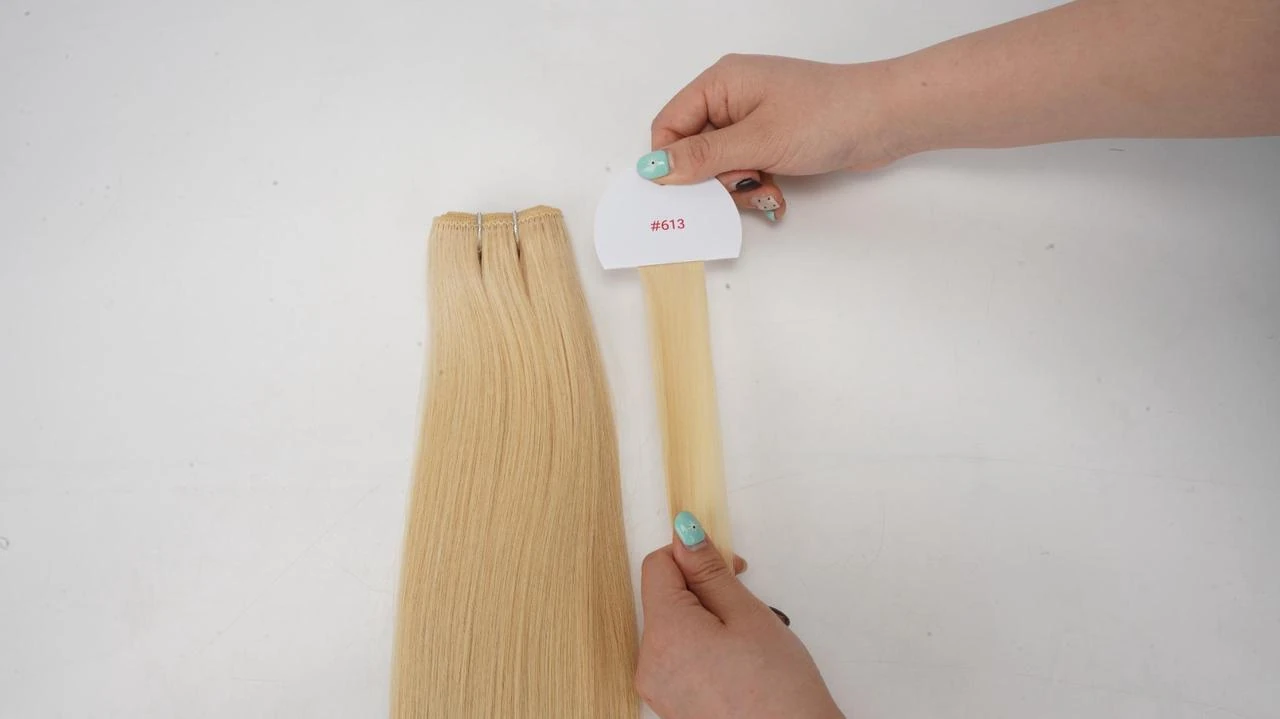
Color consistency is extremely important when salons purchase hair extensions in bulk. Many colors may look correct during the first wholesale order, but if color differences appear between later batches, clients may notice that the new and old hair cannot blend naturally when they come back for refills, added volume, or replacement pieces.
For salons, if a client has very high expectations, this may require extra communication around rework, replacement pieces, compensation, and other issues. Therefore, when salons receive the same color number from different batches, they should place them together for comparison. Here are the specific points to pay attention to:
Compare Against a Standard Hair Extension Color Ring Instead of Judging Only by Eye
Suppliers should consider comparing products against the corresponding hair extension color ring to ensure color deviation stays within a reasonable range, rather than relying only on experience to judge whether the colors are “close enough.”
Pay Special Attention to T Colors, Rooted Colors, Balayage, and Other Gradient Products
For these products, it is not enough to check whether the color itself is correct. Salons also need to observe the length of the darker area at the top, the color ratio, and whether the transition looks natural. Otherwise, the finished installation may show harsh color breaks or unnatural color blocks.
Avoid Judging Color Under Strong Lighting
Indoor lighting can more easily change the visual appearance of hair color, especially for cuticle-intact hair. This type of hair may create a color-difference effect because the cuticle reflects light. For this reason, salons should not compare colors only under artificial lighting.
Compare Colors in Natural Light When Possible, But Avoid Direct Sunlight
Natural light may show the hair color more accurately. However, it is worth noting that direct sunlight can also cause reflection and color shifting. Therefore, it is best to check color in a natural-light environment without direct sunlight.
2. Confirm the Real Hair Weight, Not Just the Package Weight
When buying wholesale hair extensions in bulk, some salons may judge whether the hair volume is sufficient only by looking at the weight marked on the package or by how full the product appears. In fact, this is not appropriate, because what affects the installation result the most is pure hair weight.
If the supplier does not calculate accessory weight separately, the weight shown on the package may include clips, fish wire, tape tabs, packing thread, or other accessories. In this case, the actual pure hair weight received by the salon may be lower than expected, resulting in a finished look that is not full enough.
As a result, clients may request additional pieces or rework. This increases salon operating costs and compresses profit margins. Therefore, before purchasing in bulk, salons should confirm whether the hair extension wholesale supplier has a clear weight inspection process. The specific points to note are as follows:
Be Aware That Clip Weight Affects the Final Weight Judgment
Take clip-in hair extensions as an example: a 2.8 cm clip weighs about 0.8 g, while a 3.2 cm clip weighs about 1 g. If one set of clip-in hair extensions has multiple clips, the total accessory weight will noticeably affect the final pure hair weight.
Accessory Weight Needs to Be Calculated Separately
Considering that products such as clip-ins extensions come with accessories, these accessories cannot be counted as part of the hair weight.
Check Whether the Weight Falls Within the Allowed Tolerance Range
A professional wholesale hair extensions supplier should have a clear weight tolerance standard. According to quality inspection requirements, the allowed weight tolerance should usually be controlled within a reasonable range, to avoid obvious underweight issues in bulk orders.
3. Check Hair Fullness and End Density
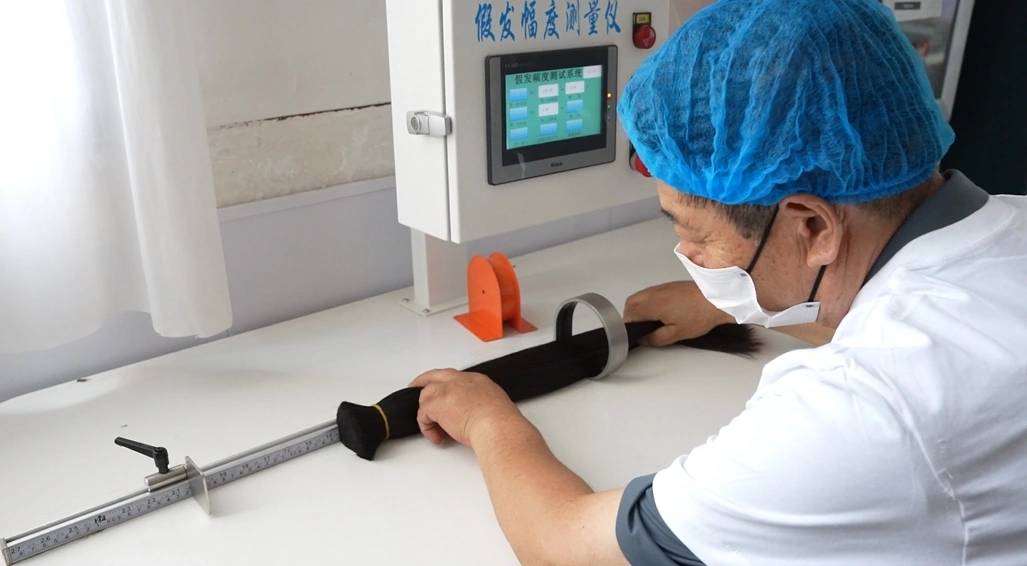
In addition to checking whether the product weight meets the standard, as mentioned above, it is also necessary to check the end fullness. Unlike weight, the fullness ratio is not simply a way to judge “how much hair there is.” Instead, it reflects whether the density distribution from the root to the ends is reasonable.
If the fullness ratio is too low, the ends may not be full enough. If the ends are too thin, this may limit the stylist’s ability to cut and layer the hair, making it difficult to create a natural, smooth, high-end finish at the ends.
For salons, this directly affects the quality of the final style and reduces the premium pricing potential of high-end hair extension services. Therefore, salons should confirm whether the supplier has a stable fullness measurement standard.
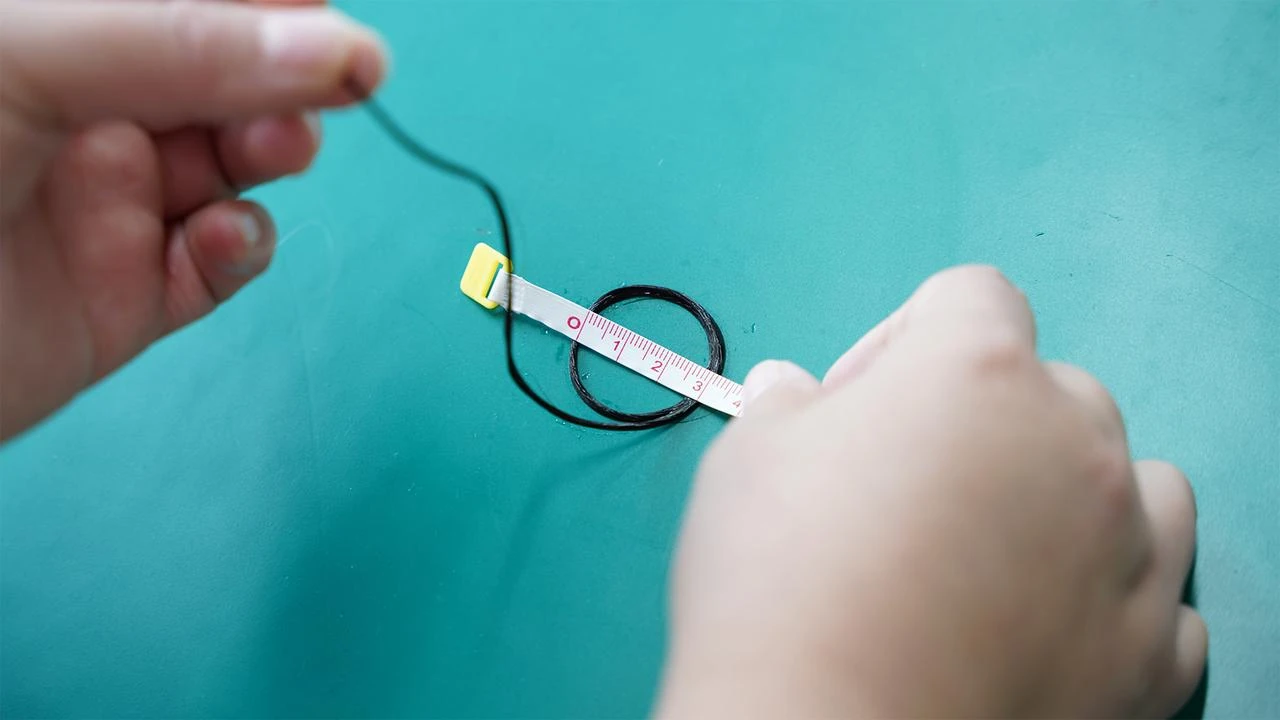
Use Thread and a Ruler Instead of Judging Only by Hand Feel
4. Inspect Attachment Quality for Each Hair Extension Type
In addition to the hair color, weight, and end fullness mentioned above, salons purchasing wholesale hair extensions are also advised to pay attention to the attachment details of different extension types.
Because different products use different installation methods, the areas where problems may occur are also different. For example, tape-ins require attention to the condition of the tape tabs, flat tips and U tips require attention to the shape of the keratin tips, clip-ins require attention to clip stitching, and weft products require attention to whether the weft edge is even.
If the supplier can carry out corresponding inspections for different product types, it usually helps reduce the risk of difficult installation, uncomfortable wear, or later rework.
Where to Buy Wholesale Hair Extensions for Your Salon?
Dear salon owners, to reduce after-sales concerns and communication costs, choosing a wholesale human hair extensions manufacturer with a relatively clear quality inspection process can save you a lot of trouble. That is because what truly affects the client experience is often not whether the product looks beautiful inside the package, but whether the color is stable, the weight is sufficient, and the ends are full.
As a human hair extension wholesale factory serving B2B clients, ESSMEI not only provides different types of hair extensions, but also pays attention to the details in bulk purchasing that can easily affect salon service results. To help improve your service quality, our quality inspection process covers multiple aspects, including color matching, real hair weight, fullness measurement, and product-type details.
| Issues Salons Care About | How ESSMEI Supports Them |
| Color consistency | Products are compared against standard color charts. For products such as T colors, rooted colors, balayage, and mixed-color shades, attention is paid to the color ratio and transition effect, helping reduce the risk of obvious color differences during future refills or added volume. |
| Real hair weight | Weight inspection focuses more on the pure hair weight, rather than only looking at the total package weight. For products with accessories such as clips and halo wires, the accessory weight usually needs to be considered separately, helping salons better understand the actual hair volume. |
| End fullness and fullness ratio | In addition to weight, fullness measurement can help determine whether the density distribution from top to bottom is more reasonable, helping reduce issues such as overly thin ends and styles that do not look full enough. |
| Attachment details for different product types | Different products, such as Tape In, Flat Tip, U Tip, I Tip, Clip In, Nano Ring, Micro Ring, and Weft, have different inspection priorities, such as tape tab condition, keratin tip shape, clip stitching, steel wire and keratin tip connection, and weft edge details. |
| Installation experience | Details such as whether the tape tabs are neat, whether the keratin tips are uniform, whether the weft edges are flat, and whether the clips are secure usually affect the stylist’s installation efficiency and the client’s wearing experience. |
ESSMEI can provide salon clients with multiple types of wholesale human hair extensions, including tape-in, sew-in weft, butterfly weft, keratin bond, micro-bead, and clip-in. Through factory-direct supply, product customization, and B2B service support, we can help salons choose hair extension products that better match their service menus and client needs.
Q&A
What should salons check before buying wholesale hair extensions?
Salons should check color consistency, real hair weight, end fullness, and attachment quality before buying wholesale hair extensions. These details can affect installation results, client satisfaction, refill matching, and long-term repeat purchases.
Why is color consistency important for wholesale hair extensions?
Color consistency is important because salons often need to match new hair extensions with previous installations during refills, volume services, or replacement appointments. If the color changes between batches, the new and old hair may not blend naturally.
Should salons use a hair extension color chart or color ring?
Yes. Salons should use a standard hair extension color chart or color ring when checking colors. This is more reliable than judging by eye alone, especially for bulk orders, rooted colors, balayage shades, and other gradient hair extension products.
What is the difference between package weight and real hair weight?
Package weights may include clips, tape tabs, thread, fish wire, or other accessories. Real hair weight refers only to actual hair. For salons, real hair weight is more important because it directly affects fullness after installation.
How can salons check if hair extensions are full enough?
Salons can check fullness by comparing the density near the head area with the density at the ends. Full ends are important because thin ends can limit cutting, layering, and styling, making the final result look less premium.
What quality issues can happen when buying bulk hair extensions?
Common issues include color differences between batches, inaccurate hair weight, thin ends, weak tape tabs, uneven wefts, poor clip stitching, or poorly shaped keratin tips. These issues can lead to rework, complaints, and higher salon costs.
What makes a professional hair extensions wholesale supplier reliable?
A professional hair extensions wholesale supplier should have clear quality control standards for color matching, pure hair weight, fullness measurement, and product-specific attachment checks. These processes help salons receive more stable products for bulk orders.
Where can salons buy wholesale human hair extensions?
Salons can buy wholesale human hair extensions from a factory-direct supplier that offers multiple product types, sample testing, customization, and B2B support. ESSMEI provides wholesale hair extensions for salons, including tape-ins, wefts, keratin bond extensions, micro-bead extensions, and clip-ins.
CTA
ESSMEI focuses not only on product appearance, but also on the details that determine business success, such as color consistency, real hair weight, and end fullness. We are committed to helping salons offer sustainable hair extension services with greater confidence.
We look forward to growing together.
Related Posts
 Butterfly Weft Hair Extensions: 4 Types Compared
16
Butterfly Weft Hair Extensions: 4 Types Compared
Compare four ESSMEI butterfly weft hair extensions—Flip, Invisi Flip, Genius Flip, and Twin-Genius—and choose the right option for each salon client.
Read More Best Hair Extensions for Fine Hair: Tape-Ins, I-Tips & Genius Wefts
22
Best Hair Extensions for Fine Hair: Tape-Ins, I-Tips & Genius Wefts
Discover the best hair extensions for fine hair clients. Compare Tape-In, I-Tip, and Genius Weft extensions to help salons create lightweight, natural, and comfortable results.
Read MoreComments (0)
No comments yet.