


Hair Extension Tools for Micro Bead Guide
08
Hair Extension Tools for Salons: Micro Bead Hair Extensions Guide
Micro Bead Hair Extensions are a common professional hair extension method. They do not use heat fusion, glue, or tape as the main attachment method. Instead, micro beads or rings are used to attach extension strands to the client’s natural hair. For salons, this type of extension method can attract clients who care more about glue-free and heat-free installation, wearing comfort, and a natural-looking result.
However, tool selection and application technique can directly affect the installation result, client comfort, and later maintenance. For example, if the clamping pressure of hair extension pliers is not controlled properly, the beads may be clamped too loosely or too tightly. If they are too loose, the extension strands may slip, loosen, or become visible at the attachment points. If they are too tight, they may cause pulling, pressure, and an increased risk of natural hair damage or breakage. These issues may cause clients to return to the salon more often for adjustments. For salons, they can also increase rework and after-sales costs, while affecting client satisfaction and trust in the salon’s professionalism.
Therefore, for salons and hairstylists, the final hair extension result does not depend only on the quality of the extension products themselves. It also depends on whether the right professional hair extension tools are used. Tools such as hair extension beads, nano rings, bead loop tool, hair extension pliers, and color ring can all affect installation efficiency, attachment stability, wearing comfort, and the overall natural look.
This article will explain what micro bead hair extensions are, how they relate to I-Tip, Y-Tip, and Nano Ring extensions, and which professional tools salons need to prepare when offering this type of extension service.
Key Takeaways
-
Micro Bead Hair Extensions use micro beads or rings to attach extension strands to the client’s natural hair.
-
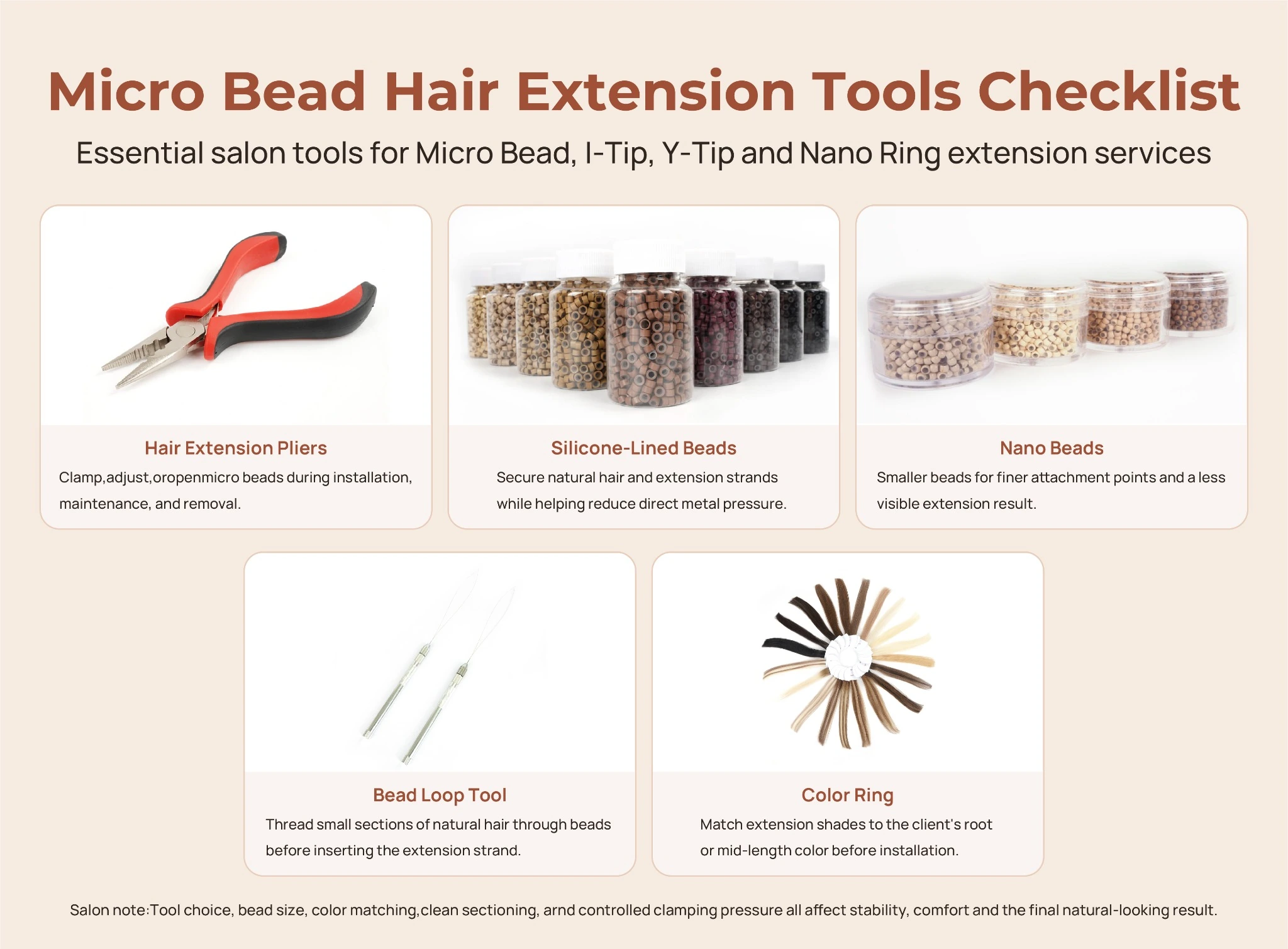
The main tools include hair extension beads, nano rings, bead loop tool, hair extension pliers, color ring, tail comb, and sectioning clips.
-
I-Tip, Y-Tip, and Nano Ring extensions are connected with Micro Bead Hair Extensions.
-
Proper bead size, sectioning, and clamping pressure affect comfort, stability, and the final natural-looking result.
What Are Micro Bead Hair Extensions?
Micro Bead Hair Extensions are a professional strand-by-strand customized hair extension method. During installation, hairstylists usually need to use a set of precise salon tools and complete the process through three key steps: threading the natural hair, inserting the extension strand, and clamping the bead to secure it.
Unlike some glue-based or heat-fusion extension methods, Micro Bead extensions mainly rely on the physical grip of beads or rings to secure the extension strands. If the bead size is suitable, the sectioning is clean, and the clamping pressure is controlled properly, the extension strands can maintain good stability during daily wear and hair care. However, their hold still depends on the hairstylist’s professional technique, the client’s hair type, the support strength of the natural hair, and the client’s maintenance habits.
Micro Bead Hair Extensions are often connected with several similar strand-by-strand extension types, including I-Tip Hair Extensions, Y-Tip Hair Extensions, and Nano Ring Extensions.
Compatible Extension Types
I-Tip Hair Extensions
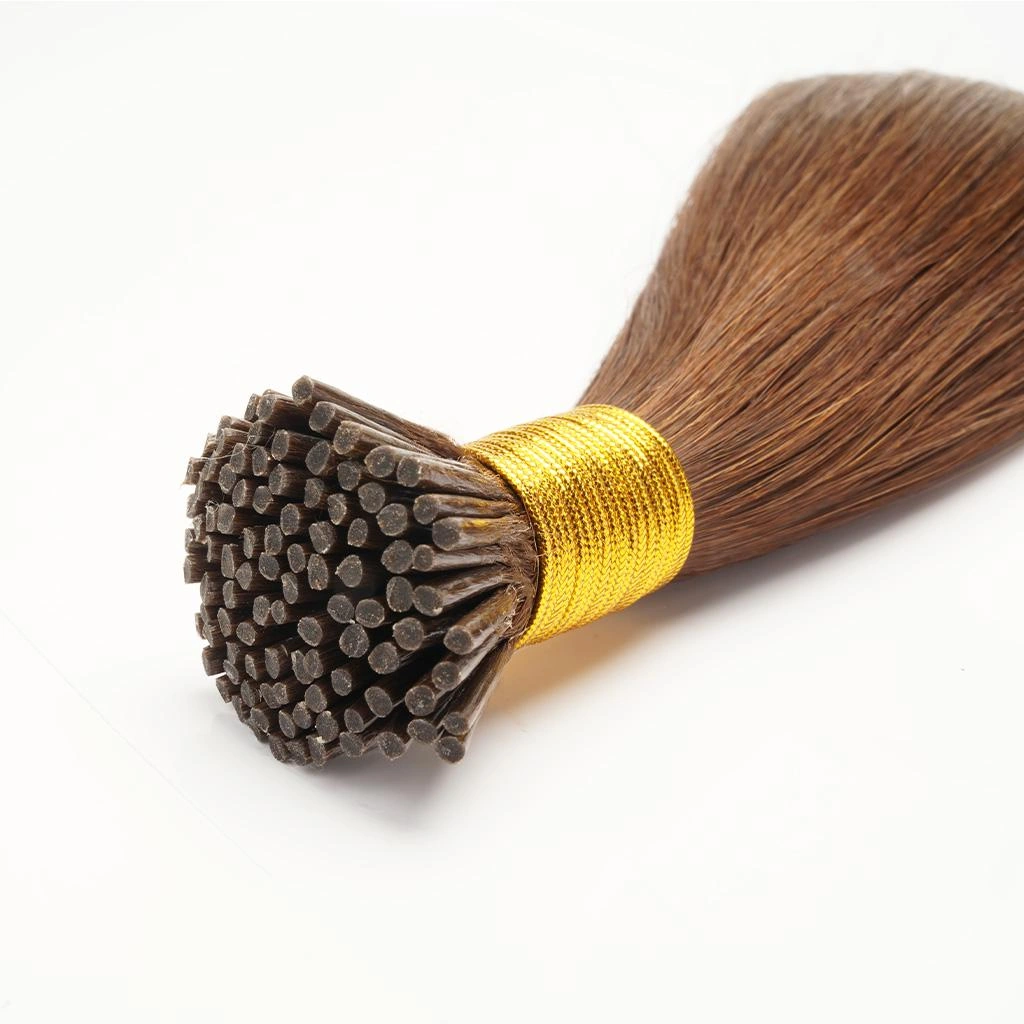
I-Tip Hair Extensions have an I-shaped tip and are one of the more common and versatile types used in micro bead installation. They are suitable for strand-by-strand placement, allowing hairstylists to adjust the placement flexibly based on the client’s head shape, hair volume, and target result. They can also help the overall hair direction look more natural.
Y-Tip Hair Extensions
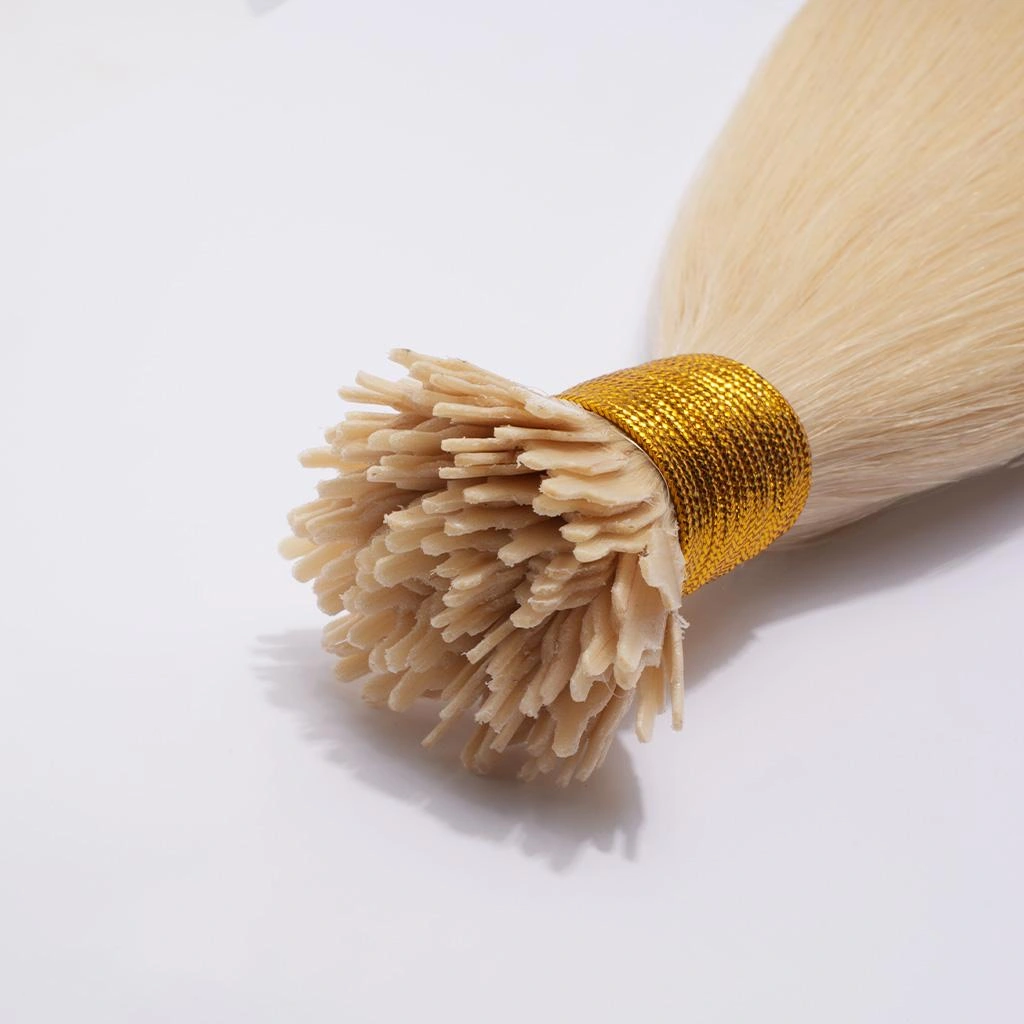
Y-Tip Hair Extensions have a Y-shaped tip. Compared with I-Tip, their structure is different. With the right bead size and installation method, they may help the extension strand stay in a more stable position inside the bead. For clients who need stronger local blending, improvement of uneven ends, or added thickness in specific areas, Y-Tip can be used as a supplementary option for salons.
Nano Ring Extensions
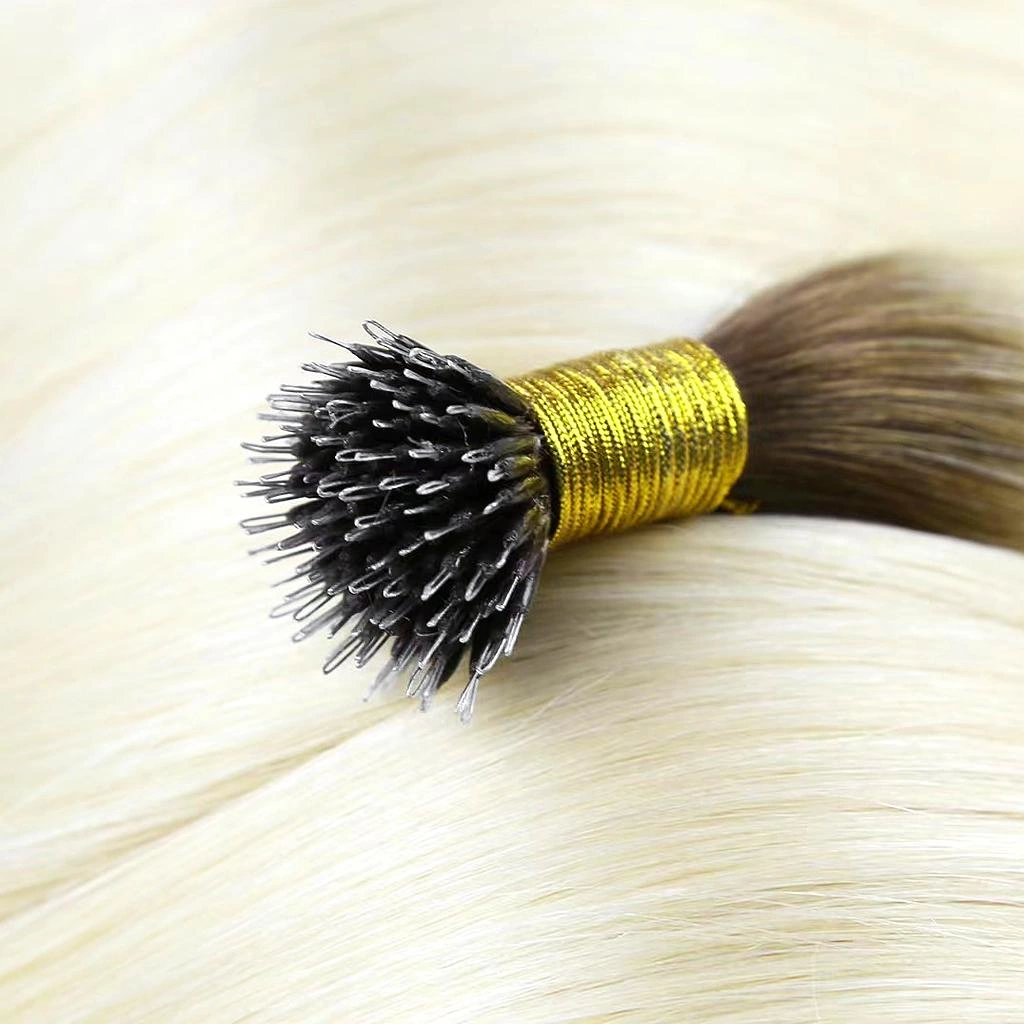
Nano Ring Extensions usually use rings that are smaller than standard micro beads, so the attachment points are finer and better suited for clients who want a more invisible result. Because the connection points are smaller, Nano Ring extensions can make the overall extension result feel lighter and less likely to show under suitable installation conditions. However, whether the client feels comfortable and whether this method is suitable still needs to be judged based on the client’s natural hair density, hair strand strength, extension strand weight, and the hairstylist’s installation technique.
Essential Tools for Micro Bead: I-Tip, Y-Tip and Nano Ring Extensions
Hair extension beads: Silicone-Lined Beads & Nano Beads
Hair extension beads are one of the most essential tools in micro bead extension installation. They are used to secure the client’s natural hair and the extension strand together. When salons choose beads, they usually need to focus on three key factors: size, color, and holding strength. The bead color should be as close as possible to the client’s root color, so the attachment points are less likely to show after installation and the overall result looks more natural.
In micro bead-related installation, the most common beads or rings mainly include silicone-lined beads and nano beads:
Silicone-lined beads have a silicone lining that can increase friction between the bead and the natural hair, helping the extension strand stay more securely in place. At the same time, the silicone lining can also reduce direct pressure from the metal bead on the natural hair, helping lower direct compression on the natural hair.
Nano beads are usually smaller than standard micro beads, and the attachment points are also finer, making them more suitable for clients who want a more invisible result. Because the connection points are lighter and smaller, Nano Ring hair extensions can reduce the visibility of the attachment points and help the overall extension result look more natural under suitable installation conditions.
Bead Loop Tool
A bead loop tool is a basic threading tool used in micro bead extension installation. The hairstylist first places a bead or ring onto the loop tool, then takes a small section of the client’s natural hair and pulls it through the bead with the loop tool, preparing it for the later insertion of an I-Tip, compatible Y-Tip, or Nano Ring extension strand.
Compared with fully manual handling, a bead loop tool can make the threading process more efficient and cleaner. It also helps hairstylists better control sectioning, the amount of natural hair taken, and the installation rhythm. For strand-by-strand services such as micro bead, I-Tip, or nano ring installation, a smooth and stable loop tool can help improve overall installation efficiency.
For salons, when purchasing bead loop tools, styles with an aluminum handle can be prioritized. Aluminum handles are usually lighter, more durable, and easier to grip and control, making them suitable for hairstylists during long, repetitive extension installation work.
Hair Extension Pliers
Hair extension pliers are professional tools commonly used for the installation and removal of micro bead, micro ring, I-Tip, compatible Y-Tip, and Nano Ring hair extensions. During installation, hairstylists can use pliers to clamp beads or rings securely. During later maintenance or removal, they can also use the tool to open or adjust the beads.
The jaws of these pliers usually have a grooved design, helping hairstylists grip micro ring beads more steadily and press or flatten them according to installation needs. Compared with regular tools, professional hair extension pliers make it easier to control clamping pressure and reduce the chance of beads being clamped too loosely or too tightly.
For salons, a reliable pair of pliers can not only make micro bead extension installation smoother, but also improve the efficiency of installation, adjustment, and removal, especially for strand-by-strand extension services that require repeated operations.
Color Ring
A color ring is used to help salons confirm the extension shade before installation, especially for strand-by-strand services such as I-Tip, Y-Tip, Nano Ring, and Micro Bead hair extensions. If the shade is not close enough to the client’s root or mid-length color, the attachment points and overall blending result may be affected. Therefore, a color ring can help hairstylists complete shade selection faster during the consultation stage and reduce the risk of later toning or shade replacement.
Tail Comb & Sectioning Clips
Tail comb and sectioning clips are basic tools for sectioning and controlling the amount of hair taken. A tail comb helps hairstylists create cleaner sectioning areas, while hair sectioning clips hold aside the hair that is not being worked on. For strand-by-strand methods such as Micro Bead, I-Tip, and Nano Ring extensions, clean sectioning directly affects whether the attachment points are neat, whether spacing is reasonable, whether the client feels comfortable, and whether the final result looks natural.
How to Install Micro Bead Hair Extensions: A Basic Salon Workflow
Before installing Micro Bead extensions, the hairstylist should first evaluate the client’s natural hair volume, scalp condition, hair strength, and target result. If the client’s hair is too fragile, has severe breakage, has scalp discomfort, or does not have enough natural hair support, it is recommended to improve the hair condition first or choose another extension method that is more suitable.
Create Clean Sections
First, based on the client’s desired result, use a tail comb and sectioning clips to create clean sections. This step is very important because clean sectioning helps the hairstylist better control the amount of hair taken in each section, the installation position, and the spacing. Proper placement can not only improve the overall natural look, but also reduce pulling or discomfort during wear. It is important to note that hairstylists should avoid placing beads or rings in areas that are easy to expose, such as the hairline, temple area, and part line.
Thread Natural Hair Through the Bead
Next, the hairstylist needs to place the bead onto the bead loop tool first, then take a small section of the client’s natural hair and smoothly pull it through the bead using the loop tool. This step is the foundation of Micro Bead installation and directly affects whether the extension strand can be secured stably later.
It is important for the hairstylist to control the amount of natural hair taken in each section. If too little natural hair is taken, the extension weight may be concentrated on a small amount of natural hair, increasing localized tension. If too much natural hair is taken, the bead may not close completely, affecting the hold. Therefore, the amount of hair taken should be adjusted according to the client’s hair type, hair volume, bead size, and extension strand weight.
Insert the Extension Strand
In this step, the hairstylist needs to place the I-Tip hair extension, compatible Y-Tip extension strand, or corresponding Nano Ring extension strand into the bead according to the chosen extension method, making sure the position is smooth and the direction is consistent before clamping it to secure the strand.
However, salons need to pay attention to the angle and depth of the extension strand placement. If the extension strand is not positioned correctly, it may not lie flat, may slide, or may create an uneven attachment point after clamping. If it is inserted too shallowly, it may also affect attachment stability. Therefore, before clamping, the hairstylist should confirm that the natural hair and extension strand are neatly aligned and follow the natural direction of the client’s hair.
Secure the Bead with Hair Extension Pliers
After the hair is inserted, the hairstylist needs to use hair extension pliers to clamp the bead or ring, securing the extension strand to the client’s natural hair. This is a key securing step in Micro Bead installation and directly affects whether the extension strand is secure, whether it feels comfortable to wear, and whether it is likely to slip later. If the bead is clamped too loosely, the extension strand may slip, loosen, or become visible at the attachment point. If it is clamped too tightly, it may put pressure on the client’s natural hair and increase the risk of pulling or damage.
Check Comfort and Prepare for Maintenance
After installation, the hairstylist should check whether the beads or rings are secure and confirm whether the client feels any pulling, pressure, or other discomfort.
Micro Bead and Nano Ring extensions usually require later maintenance. Salons should prepare extra beads, rings, hair extension pliers, bead loop tool, and sectioning tools for future move-up, adjustment, or removal services.
(This section outlines a basic salon workflow for professional hairstylists. Micro bead hair extensions should be installed by trained hairstylists using suitable tools and proper tension control.)
Example: ESSMEI Nano Ring Extensions Installation Process
Frequently Asked Questions
What tools are needed for Micro Bead Hair Extensions?
Salons usually need hair extension beads or nano rings, a bead loop tool, hair extension pliers, a color ring, a tail comb, and sectioning clips.
What are Micro Bead Hair Extensions?
Micro Bead Hair Extensions use micro beads or rings to attach extension strands to the client’s natural hair without heat fusion, glue, or tape as the main attachment method.
Can I-Tip Hair Extensions be used with micro beads?
Yes. I-Tip Hair Extensions are commonly used in micro bead installation because the I-shaped tip can be inserted into beads or rings and secured strand by strand.
What are hair extension pliers used for?
Hair extension pliers are used to clamp beads or rings during installation, and to open or adjust beads during maintenance or removal.
CTA
If your salon is looking for stable, professional Micro Bead extension products, such as I-Tip, Y-Tip, or Nano Ring extensions, along with related extension tools, ESSMEI can provide hair extension solutions suitable for salon services.
Contact us to get wholesale pricing, color charts, sample kits, or professional product recommendations to help your salon offer hair extension services more efficiently.
Related Posts
 Butterfly Weft Hair Extensions: 4 Types Compared
17
Butterfly Weft Hair Extensions: 4 Types Compared
Compare four ESSMEI butterfly weft hair extensions—Flip, Invisi Flip, Genius Flip, and Twin-Genius—and choose the right option for each salon client.
Read More Best Hair Extensions for Fine Hair: Tape-Ins, I-Tips & Genius Wefts
22
Best Hair Extensions for Fine Hair: Tape-Ins, I-Tips & Genius Wefts
Discover the best hair extensions for fine hair clients. Compare Tape-In, I-Tip, and Genius Weft extensions to help salons create lightweight, natural, and comfortable results.
Read MoreComments (0)
No comments yet.