


Clip-ins vs. Tape-ins: Ultimate Guide for Salons
011
The Ultimate Guide to Clip-ins and Tape-ins: Differences, Pros & Cons, and Wholesale Insights
In the hair extension industry, knowledge is one of the most valuable assets. Understanding product specifications is essential for evaluating a salon’s competitiveness. Take Clip-ins and Tape-ins hair extensions as examples: Clip-ins are quick and convenient, making them ideal for temporary styling, while Tape-ins are seamless, comfortable, and designed for longer wear.
Unfortunately, many stylists focus heavily on creative styling but overlook product characteristics. This often leads to improper use and, in some cases, negative customer experiences.
For example, in several NYC salon cases, clients with frequent swimming routines reported Clip-in instability within a single-day wear cycle, resulting in an embarrassing situation.
This case highlights an important point: a hair extension specialist should not only be a stylist, but also understand product performance—such as weft weight capacity, adhesive water resistance, and lifestyle compatibility. Salons that can balance product knowledge with aesthetics are the ones that build strong reputations and turn every installation into real business value.
As a global factory-direct partner in professional hair extensions, ESSMEI not only supplies hair products, but also provides insights that support business growth.
Key Takeaways
-
Strategic Positioning: Clip-ins are ideal for flexible, event-based styling and retail-driven traffic, while Tape-ins serve as a semi-permanent, service-oriented profit driver.
-
Application & Lifestyle: Clip-ins focus on "no-commitment" DIY convenience, whereas Tape-ins are designed for a "wake-up-and-go" lifestyle with 24/7 integration.
-
Hair Compatibility: Tape-ins offer a more seamless, flat-laying finish suitable for fine hair, while Clip-ins provide instant, high-impact volume for various hair textures.
-
Business Impact: Offering both methods allows salons to capture a broader market, balancing fast-turnover retail sales with high-retention professional services.
To help you better categorize these solutions for your inventory and client consultations, we have outlined the strategic distinctions between these two methods. Below is a quick overview of how each product can best serve your salon’s business model and client lifestyle needs.
What are Clip-ins?
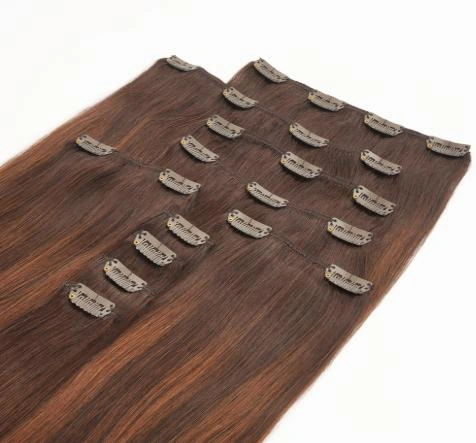
Definition & Overview
Clip-in hair extensions are a temporary, removable extension method. They use pressure-sensitive clips, allowing users to apply them without glue or professional tools. In just 5–10 minutes, they can transform short hair into long hair or add volume to thin hair, making them one of the most flexible styling solutions available.
How to put in clip in hair extensions
-
Sectioning: Identify a balanced area around the occipital bone.
-
Clipping: The inner clips are coated with silicone to prevent direct metal contact with the hair, ensuring grip through friction rather than damage.
-
Blending: A layered placement technique is recommended to distribute weight evenly and avoid tension on a single point.
How ESSMEI Ensures Quality Clip-ins
-
Premium hair selection: We use 100% real Human Hair with strict unidirectional cuticle alignment to make clip in hair extensions. Even in humid or windy conditions, the strands remain smooth and aligned, minimizing tangling and frizz for long-lasting salon quality.
-
Natural flow and density balance: Through controlled thickness ratios, each weft transitions smoothly from root to tip, creating a seamless and even volume after installation.
ESSMEI Clip-In Hair Extensions Step-by-Step Application Guide
Who Clip-ins Are Best For
As a B2B partner, Clip-ins are especially suitable for the following customer groups:
-
Style-flexible users: Gen Z consumers, influencers, and content creators who frequently change hairstyles and prefer non-committal solutions.
-
Occasion-based users: Brides, event attendees, models, and photoshoot clients who need temporary but high-impact transformations.
What are Tape-ins?
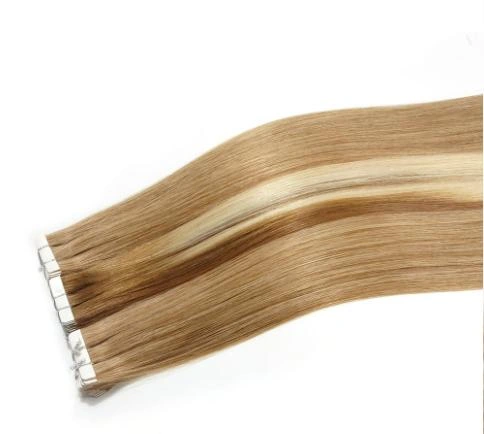
Definition & Overview
Tape-in extensions are a widely used semi-permanent method. They use medical-grade adhesive tape designed for cosmetic use. Two thin adhesive strips sandwich the natural hair, creating a flat, invisible, and seamless natural-looking finish. Compared to Clip-ins, Tape-ins are better suited for longer-term wear and everyday use.
How to install and maintain tape ins
-
Professional installation: Must be applied by trained stylists to ensure precise sectioning and even tension.
-
Maintenance cycle: Every 6–8 weeks, clients should return to the salon for repositioning (re-taping). A professional remover should be used to take out tape ins —never pull the extensions off forcefully.
-
At-home care: Avoid shampoos containing ethanol or strong silicones, as these ingredients may weaken the adhesive bond.
How ESSMEI Ensures Quality Tape-ins
-
Clean adhesive application: we provide remy human hair tape ins with no excess glue or residue, ensuring a clean surface and preventing installation issues.
-
Color stability under heat control: For ultra-light blonde tape in shades such as #60 or #1000, we carefully control drying temperature and speed to prevent yellowing and maintain a clean, transparent tone.
ESSMEI Tape In Hair Extensions Step by Step Installation Guide
Who Tape-ins Are Best For
-
Long-term wear clients: Those who prefer a “wake up and go” lifestyle and want extensions that blend naturally into daily routines.
-
Fine hair clients: Because Tape-ins distribute weight over a larger surface area, they place minimal stress on the roots, making them ideal for adding volume to fine or delicate hair.
What is the difference between Clip-ins and Tape-ins?
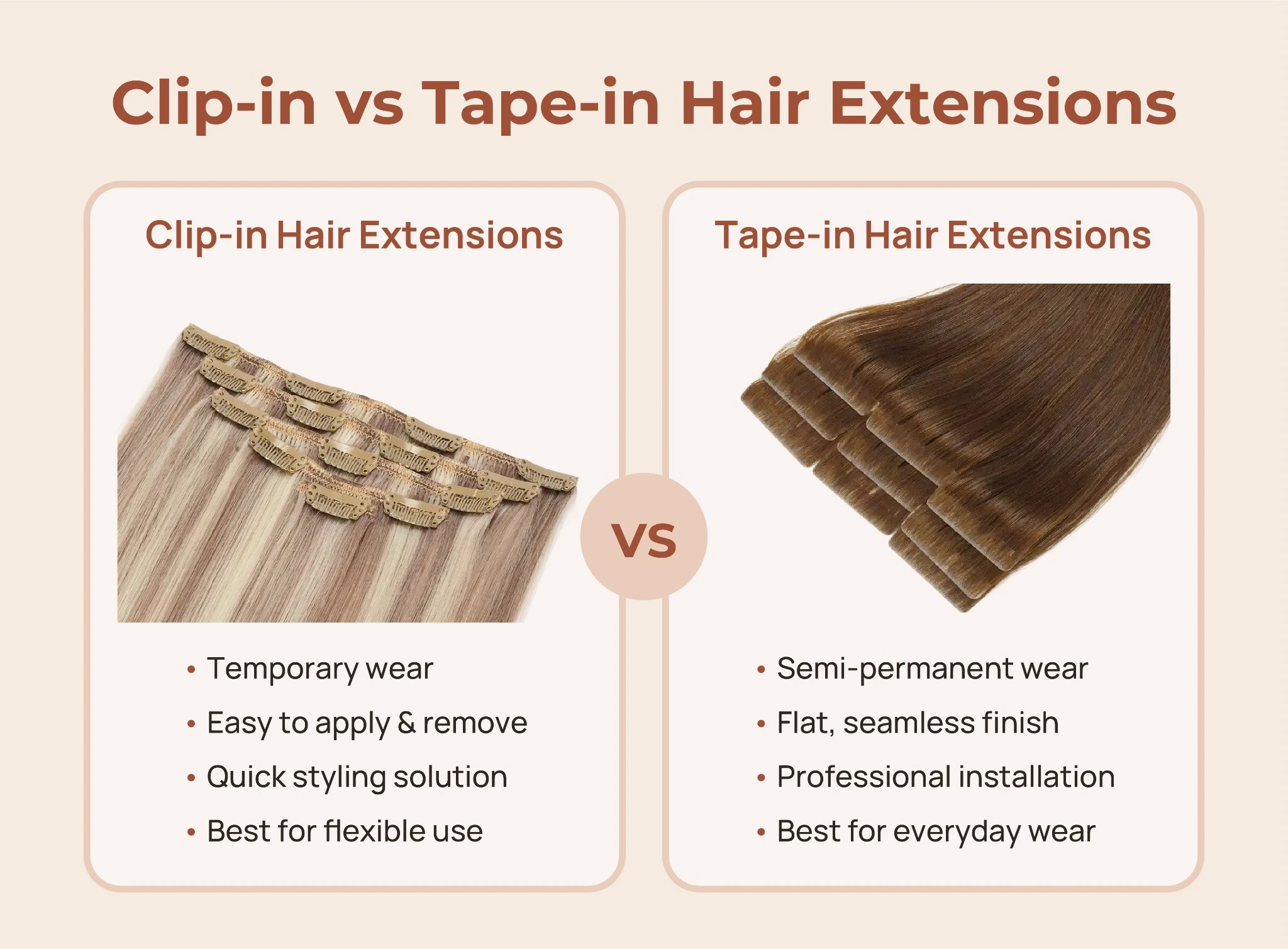
Clip-ins vs. Tape-ins: Full Comparison Overview
| Dimension | Clip-ins (Retail-Oriented) | Tape-ins (Service-Oriented) |
| 1. Technical Specs | ||
| Installation Method | 5-20 minutes DIY, no tools required | 30-90 minutes, requires a certified stylist |
| Thickness & Fit | Base approx. 1.5mm-2.0mm, needs to be covered by layers of natural hair | Ultra-thin 0.5mm-0.8mm, lays flat against the scalp, virtually invisible up close |
| Material Science | Pressure-formed metal clips + protective silicone coating | Medical-grade hypoallergenic adhesive + nano PU base |
| 2. Experience | ||
| Wear Cycle | Temporary: Must be removed before sleep daily | Semi-permanent: Continuous wear for 6-8 weeks, 24/7 integration |
| Sports & Social | Suitable for daily, dates, and static photos; no swimming | Suitable for all scenarios: Showering, gym, swimming, or sleeping |
| Comfort | Slight feeling of weight, not for extremely fine hair | Free-feel: Weight is evenly distributed, top choice for fine hair |
| 3. Pros & Cons | ||
| Main Pros | - High flexibility: Put on/off anytime - Long lifespan: 12+ months with care |
- Instant beauty: Wake up ready - Ultimate invisibility: Perfect for high ponytails |
| Main Cons | - Operational cost: Needs daily reapplication - Stability: Risk of slipping during exercise, can't sleep with clip in hair extensions |
- Maintenance: Regular salon care required - Washing: Avoid oil/silicone near bonds |
| 4. B2B Impact | ||
| Customer Logic | Traffic-driver: Lowers entry barrier, for online retail | Profit-driver: Deeply binds customers, high repurchase rates |
| Output Analysis | Fast volume sales, low after-sales service cost | Product premium + labor fees: Increases salon turnover |
| Inventory Strategy | Focus on trending colors like Balayage | Focus on Natural Shades and various backup lengths |
Inventory & Stock Strategy
-
For Gen Z markets: Focus on Clip-ins in balayage shades. These customers value flexibility and “no commitment” color changes.
-
For high-end clients: Promote Tape-in systems. Salons should stock natural shades along with multiple size options, as these remain top-selling categories globally.
FAQ
Q: What is the main difference between Clip-ins and Tape-ins?
-
A: Clip-ins are temporary, removable extensions ideal for quick styling, while Tape-ins are semi-permanent, seamless, and designed for long-term wear of 6-8 weeks.
Q: Who should choose Tape-in hair extensions?
-
A: They are best for clients seeking a "wake up and go" lifestyle and those with fine hair, as they distribute weight evenly across the scalp.
Q: How do I maintain tape-in extensions at home?
-
A: Avoid shampoos containing ethanol or strong silicones to protect the adhesive bond, and always use a professional remover for take-outs.
Conclusion
Clip-ins represent freedom and instant transformation, while tape-ins represent refinement and long-term wear.
For wholesale buyers, these two are not competitors but complementary tools. By building a diversified product range, salons can meet the needs of both short-term styling clients and long-term extension users.
Ready to upgrade your salon product line?
Related Posts
 Butterfly Weft Hair Extensions: 4 Types Compared
17
Butterfly Weft Hair Extensions: 4 Types Compared
Compare four ESSMEI butterfly weft hair extensions—Flip, Invisi Flip, Genius Flip, and Twin-Genius—and choose the right option for each salon client.
Read More Best Hair Extensions for Fine Hair: Tape-Ins, I-Tips & Genius Wefts
22
Best Hair Extensions for Fine Hair: Tape-Ins, I-Tips & Genius Wefts
Discover the best hair extensions for fine hair clients. Compare Tape-In, I-Tip, and Genius Weft extensions to help salons create lightweight, natural, and comfortable results.
Read MoreComments (0)
No comments yet.